[00:01] Announcer:
Welcome to Principal Center Radio, helping you build capacity for instructional leadership. Here's your host, Director of the Principal Center, Dr. Justin Baeder. Welcome, everyone, to Principal Center Radio.
[00:13] Justin Baeder:
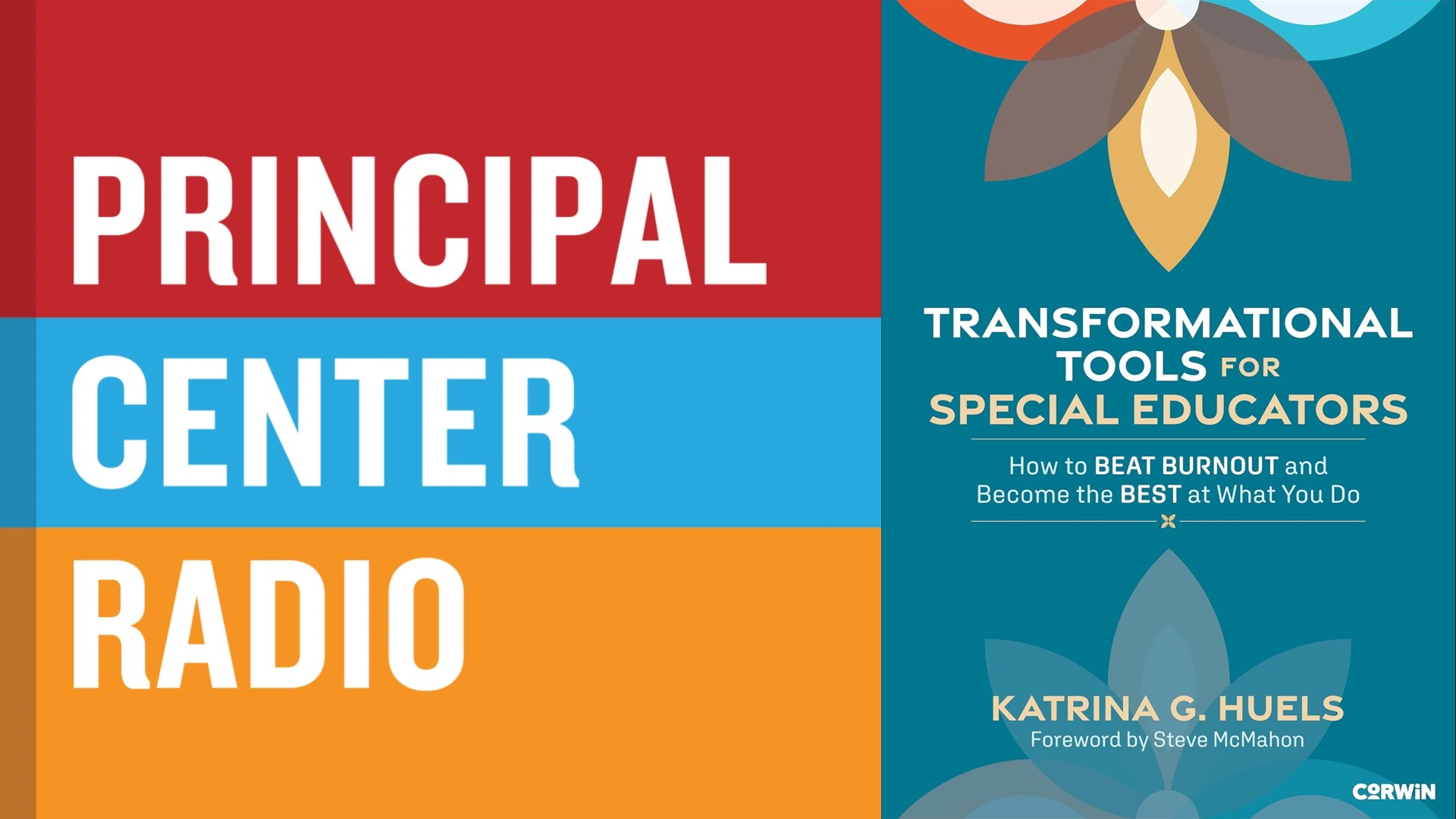
I'm your host, Justin Baeder, and I'm honored to welcome to the program Katrina Huels. Katrina is an educational consultant with more than 20 years of experience in the field, including work as a classroom teacher, special education supervisor, and now independent consultant. Her background in psychology and evidence-based practice shapes everything she does, from instructional design and program leadership to developing accredited professional learning programs that spark growth, resilience, and purpose. She is the author of the motivation toolkit, Cultivate Your Inner Drive, and the new book, Transformational Tools for Special Educators, which we're here to Katrina, welcome to Principal Center Radio.
[00:54] Katrina Huels:
Thank you so much. I'm excited to be here, Justin.
[00:57] Justin Baeder:
Well, I'm excited to speak with you because I think the set of issues that you're addressing in this book applies not only to special educators, but all educators, and certainly it will have particular resonance to people who've worked in special education, but yeah, certainly a familiarity to everyone who has worked in education over the past few years. What did you see happening in our field that prompted you to write the book?
[01:20] Katrina Huels:
Well, I think like many leaders, what I started to see was a lot of Chronic stress leading to high absenteeism. Teacher retention was just so challenging. Positions remained vacant sometimes the entire school year and beyond, you know? And then I saw what makes me really sad is that I saw so many amazing educators and leaders losing their passion for the work. And it was pretty much based on those levels of stress, burnout. It's unsustainable after a while, you know?
[01:49] Justin Baeder:
And certainly in special education, you know, people would not say that special education has ever been, you know, an easy or particularly low job, especially when an IEP deadline is coming up. And, you know, there are often multiple things going on at once. And then, of course, you have the job of actually teaching students, as well as all the paperwork and the parent meetings. So, like, this has never been an easy job. What do you think has shifted in recent years that has tipped it into, you know, a position that is just hard to fill, period?
[02:17] Katrina Huels:
I think there's a lot of factors that go into it. I think more and more is being demand of our teachers. We really expect teachers and leaders to do a tremendous amount, wear several hats, sometimes work late hours, working from home, you know, finishing your lessons at home or your action plan at home. I mean, there's so much that you have to do outside of normal working hours. And then, you know, the funny thing is when I started doing this research and asking those questions, you know, why are we here? I thought, like you said, maybe it's, you know, the students, because I started in the special ed area looking for answers there.
[02:48]
And I thought, our students are tough, you know, they're beautiful, but they're very complicated and tough, and maybe that's what the issue is. And then I realized, no, every, everyone I speak to, or every research piece that I read, The kids are not the problem. Everybody's very invested in the kids. It doesn't matter how complex they are or how challenging. That's just part of what they love. The issue is that, in my humble opinion and in the research that I've read, the issue is that we're not providing educators or leaders with the tools they need to manage the stress that comes with the role.
[03:18]
And if you go back further, there's always been a tremendous amount of stress with being an educator, and there's always been a tremendous amount of demands placed on educators. So, none of that is necessarily new. I think what we're finding, though, is that we're not equipping teachers to deal with that effectively.
[03:35] Justin Baeder:
It strikes me that historically, perhaps we could just expect that the people who showed up were ready to deal with those challenges, were re-equipped to handle the emotional toll of, you know, maybe getting kicked by a student and then having to take a day and have a parent meeting about it and continue working with, you know, like, there's a lot that I think historically has been normal, even though it is challenging.
[03:56] Katrina Huels:
And having 40, like, having 40 kids in a classroom and You know, half of those kiddos having very individualized needs. Those are the kind of stressors that might not have been as prevalent years and years and years ago, but they've certainly been prevalent for a long time. And I think that, you know, of course, the skills to mitigate that stress, to keep your balance, to keep your composure, those were skills that are expected to be, you know, something individual. I either choose to do that or I don't choose to do that. And in some ways, that makes a lot of sense. But I think where we are now, we're looking at...
[04:27]
57% of K-12 teachers, and we're not talking about special ed, we're talking about K-12 all teachers, 57% report being burned out often or always, you know, and then for principals, I think the latest statistics were 2025 on that one, and there was over 40% of principals that reported chronic stress or burn out. I mean, this is huge. And if you're that stressed and that burned out, I know as a leader, you know, when I would become stressed and burned out, I wasn't my best. I wasn't a great leader. I was very impatient. My problem solving abilities weren't at the top of their game.
[05:04]
I mean, it affects everything. And then there's that ripple effect that comes, of course, from leadership, because I do think that, that leaders set the tone and when leaders are stressed as well. then you can't help but see that reflected in the culture.
[05:18] Justin Baeder:
And you take an emotional intelligence approach to these issues, right? Tell us a little bit about that.
[05:24] Katrina Huels:
Well, like I said, when I started to research solutions, I realized, you know, we're not really tackling this head on. I think a lot of solutions, and this is kind of sad, but a lot of solutions are high absenteeism. Basically, I need a mental health week, not a day anymore. I need a mental health week. And then sometimes It's enduring while you count down the calendar days until the next break. I mean, that's not really a strategy either.
[05:47]
But as I started looking for solutions, I realized Yale Center for Emotional Intelligence, Yale has been really big in bringing this information into schools. Case Cell is another one. ProSocial Classroom, CARE, there's several programs out there that, instead of looking at emotional intelligence as a wellness initiative or self-help, they are looking at it as a core professional competency. So your ability to be self-aware, to regulate your own emotions, to trigger your own internal motivation, all of those things are actually core competencies that are developed and that basically create an entirely different culture. And it also creates responsive leadership. And the data coming out of those programs, I feel, is quite impressive.
[06:32]
You're seeing increases in job satisfaction. You're seeing less teacher turnover. You're seeing more productive collaboration. All of these things are moving over into the classroom, so you see your student outcomes improving, classroom management improving. I mean, it's just across the board. Now, when schools really make this an expectation and make it a core competency, not self-help fluff, because it's all based on science, you know, emotional intelligence is social science, and the results on that are very clear and have been around for years, so... You're framing these as competencies, right, that individuals can develop and that organizations can help and expect people to develop, is that right?
[07:10]
That is absolutely right, yes.
[07:12] Justin Baeder:
Take us into some of those competencies because certainly we, you know, again, have always expected that people could handle the demands of whatever job they prepared for and chose to enter. Like, we're not forcing people to become teachers. We're hiring people who presumably want the job, but that doesn't mean that everybody comes in with exactly the competencies that they need to succeed. So what are some of those competencies and what does it look like to help people identify and develop those competencies so that they can succeed?
[07:39] Katrina Huels:
Well, in my book, I certainly, I use the five domain framework, but there are other emotional intelligence frameworks as well that are sometimes used in leadership circles. But for the purposes of our chat, I'll just talk about the five domains that, that I cover and I think are pretty much aligned with the Yale RULER program. So we're looking at three internal domains. We're looking at self-awareness, we're looking at self-regulation, and we're looking at motivation, internal motivation. Those are those internal skills or competencies that lay the foundation before you can move into empathy and social skills. I mean, those come later.
[08:15]
You have to have the internal balance and composure before you can really practice social skills or empathy. And so once you start, for instance, in self-awareness, I could ask you a question. I could say, have you ever had a situation that really, really stressed you out very quickly, and all of a sudden you reacted? And then after you reacted, you said, where did that come from? I have no idea where that came from. Does that ever happen to you, Justin?
[08:41] Justin Baeder:
I feel like I can usually tell when I'm, and maybe even, you know, deny that it's happening, but I feel like I can tell when something's getting to me. Before you actually respond? I think so. Maybe that's just my administrator training, but... That is awesome.
[08:55] Katrina Huels:
Actually, that is amazing, because almost everyone I ask that question to says, yes, I've always had that moment where... I react and then I think, oh my gosh, where did this, where did that response even come from? That's self-awareness. So as a leader, if you have that skill, Justin, then you're way ahead of the game because a lot of people really struggle with that.
[09:12]
They don't realize that the stress is building. They don't realize that it's starting to well up until after they've responded or reacted. And then they are like, oh my goodness, what just happened? So self-awareness is really about being keenly aware. of where you are emotionally, just like you, just like you said. So do you, have you always been that way, or you said it was part of your training?
[09:32]
I'd love to hear more about that, about the training you receive, your administrator training.
[09:36] Justin Baeder:
Yeah, I don't know if it was explicit training or just kind of the conditioning of the profession where you have to encounter a lot of stressful situations. You do encounter a lot of stressful situations every day. And it's your job to be the calm one in the room, you know, when somebody's yelling and upset or, you know, to come in when a student is very upset and try to get them calm. So, I don't know if that's just...
[09:58]
the day-to-day demands of the job or if that's a personality thing, but I do feel like there is not enough training on that. And I don't know that I've ever heard a good explanation of how to develop that. Do you have thoughts on that?
[10:09] Katrina Huels:
Well, that's the thing. A lot of people have some of those skills. They have them more as individual character traits. That can definitely happen. But I think that most of us, we are deficient in one or more of the domains. So some of the domains we have, we may have pretty, like, for instance, empathy is pretty easy for me.
[10:25]
I've always been empathetic. I don't necessarily... Need additional training on empathy. It's always been a part of who I am.
[10:32]
I've always been very positive. And, of course, that plays well with staff and with kids. Some people, though, pretty... They're deficit in that area.
[10:40]
So they might need to focus more on empathy. So that's why there's five domains, because what works for you, what you need, you know, to stay grounded and balanced may be quite different from someone else, if that makes sense. So self-regulation is a little different. It starts with self-awareness, but self-regulation is keeping yourself kind of what you described, calm throughout the day, keeping yourself at a place where you're responding and not reacting, right? So you're taking the time to process, to think, and then to actually respond. And I think that less and less people are comfortable with that or doing that on a consistent basis.
[11:16]
It can be really challenging if you're in the midst of a crisis. Because when you're in the midst of a crisis, your stress response kicks in. And so, pretty much, you have to choose to override that and bring yourself back into cognitive thinking. And self-regulation, there are tools there that help with that. There are quite a few, but some of the ones you've probably heard of have to do with breathwork in the moment. That's a really powerful one.
[11:40]
There's lots of different types of breathwork. It takes, like, five or ten minutes. But what people have found is that when you use breathwork throughout the day, rather than in the middle of the crisis, it becomes your default. So, then, when the stress response hits, you're not even really, you're not even really going there too much, right? Instead, you're breathing. You're breathing through it immediately.
[11:59]
It becomes a default response. Don't tell me you do that one, too, Justin.
[12:03] Justin Baeder:
Not on purpose, no. Definitely, I'm not a conscious breather.
[12:06] Katrina Huels:
So, there's different techniques for breathing. There's belly breathing. There's four-square breathing, which is one of my favorites. Alternate nostril breathing, diaphragmatic. There's a lot of different ways you can integrate breath work. But when people are doing it at scheduled times throughout the day, they just maintain a sense of balance that carries through to all of their work.
[12:24]
And then, of course, they can always pull the tool out if they're in the midst of a crisis. A lot of times you can include that in DBT strategies and other tools. It's a great tool to add along to the other tools. And then when we get into internal motivation, why that's so important to me for educators is because internal motivation for educators has a lot to do with staying strongly connected to your purpose. Because a lot of times, that is what motivates most educators, is they have a purpose, they have a reason, they're trying to make a positive difference, they believe in what they're doing, that's their, that's part of their purpose. But when you're chronically stressed and chronically fatigued, the research shows that you start to become detached from what you're doing.
[13:05]
There's a detachment factor there. And unfortunately, that's always the saddest. When I was talking about losing your passion, that's what I mean, that you're kind of losing the connection to your purpose. So being internally motivated, developing those skills, keep you connected. Because when you're connected to your purpose, then a lot of the stress sort of can mitigate itself, if that makes sense. But when you start to get detached, when you're kind of not sure, what am I doing this for?
[13:30]
When those kinds of questions start creeping in, it's a lot harder. It's a lot harder to stay, to stay content in the workplace, if that makes sense. So that's a lot of the skills for internal motivation are crucial in keeping you connected to your purpose.
[13:45] Justin Baeder:
A couple of things you said there that I think are worth really highlighting and going back to that, one, the more we do these things on a regular basis, the more kind of natural and available to us they are in a stressful situation. So you're saying don't save these for a stressful situation, right?
[14:03] Katrina Huels:
Thank you for saying that, Justin. So one of the chapters in my book is about neuroplasticity because it's a big part of, I mean, again, they're not quick fixes. I want people to understand they are ways Okay, so, um...
[14:33]
Sweating and getting... Your breathing starts to get shallow. Instead of all that happening, you immediately move into a breathing exercise. That's what we want.
[14:42]
It becomes your default. It becomes the way you engage, the way you handle things. And that's what neuroplasticity can do. It can take those old neural networks that react to a stressful situation with the increased heart rate and all that, and it can start forming new neural networks that, instead of doing that, do things that serve you better. I hope that makes sense. It's hard to talk about neuroplasticity without getting a little too deep into it because there's so much to it.
[15:09]
It's such an amazing thing about being human is that we can change our brains anytime. And that when we do that, it actually changes our nervous system as well. It's just so... To me, I just love the fact that as people, we can literally direct what happens to us physically and mentally.
[15:25]
But we have to practice it consistently. It has to be part of our... Especially if we need to make major changes.
[15:31] Justin Baeder:
feeling like they don't like the way they feel at work or as a result of their work. There is hope out there for both, you know, obviously changing some of the external circumstances as one possibility, but actually changing the way that we think that we respond to stress. You believe that potential is really there?
[15:49] Katrina Huels:
I really do. And I think it's prevalent. I mean, if over half of teachers and 40% of leaders are feeling chronic stress and burnout, I can't imagine being happy in an environment like that. I think you might be the exception, Justin, because so many people that I talk to, they just are, they totally believe everything I'm saying because they're witnessing it every day. And you can't really be your best self if that, if you're chronically fatigued and chronically stressed. And if you've been that way for a long period of time, sometimes you're not even aware that it's there.
[16:21]
It becomes kind of part of the way you interact with others and the way you interact with yourself.
[16:27] Justin Baeder:
I think that's a good note and reality check for anybody who's listening to this. If you work in a school, like, just remember, you have a very hard job. And that relief that you feel when school is out is a very real, you know, signifier of that contrast and just the baseline challenge that it is. to work in schools. And I wonder, Katrina, if we could shift now to talking about the organizational side, because you wrote this book for not only individuals, but for organizations to think about how do we develop these capacities? How do we help our people thrive?
[16:57]
And you and I talked a little bit beforehand about the phenomenon of organizations maybe handling that badly and putting people in very stressful situations and then saying, here's a stress ball, you know, self-care, take care of yourself, have some tea. And it's like, well, you know, the tea is not going to undo the huge amount of work or the terrible situation you've put me in. So I feel like... We have to be very careful as organizations talking about these issues, especially presenting personal approaches that the individual can use to build their own capacities in the face of organizational conditions that honestly do need to change.
[17:32]
Like, I think probably every organization is overburdening or stressing people in some way. It probably needs to change. But having said that, how do we thread this needle carefully And set people up for success knowing that if I have someone who is not taking care of themselves, if they are not thinking in healthy ways, if they are, you know, not getting good sleep, if they are hyperventilating, if there are all these things that, like, yes, we need to do something as an organization, but also we need to help our individuals grow in their emotional intelligence and manage themselves. How do you think about that tension? Because I think it's a real one.
[18:04] Katrina Huels:
It's absolutely a real tension. And I think you and I were talking about this earlier. We can't force people to do that. But I think when you make it a part of the culture, when you create a culture around people who...
[18:16]
This is what they were doing at Yale University. Their ruler program is excellent at that because you have to take it on as a district or as a school. So when you create, when you take it on and you're all using the same emotional intelligence language, The same kind of expectations that you are responsible for yourself, because that's part of it, right? It's not just, here are the tools. When a school or a district takes it on, it's that this is our expectation for you to do. We kind of expect you to regulate.
[18:42]
We expect you to take care of your own needs and to ask for what you need and all of those things that go with that. You know, to communicate compassionately, but also set boundaries. These are all very healthy things that individuals do. And let's be honest, most people don't just have those naturally. You develop those skills over time. So you can't make people engage, but if your culture and your school is embracing this, then you're going to feel weird if you're not doing it because everybody else is.
[19:08]
So you're going to feel a little bit like, well, maybe I should jump in and try some of these strategies or tools or use the same language or... It just kind of, it kind of spreads, you know? And then, of course, professional development is another way that it can happen. I mean, that's not as powerful as taking a school or district approach.
[19:26]
But, you know, you have a lot of great opportunities for training. That's one of the things I loved about being an educator, all the professional development. There's so many opportunities to keep learning and keep growing. And so adding at least, you know, a substantive section on emotional intelligence development, providing the tools to the teachers, at least you're encouraging them to take individual responsibility and you're giving them the means to do that. If they don't do it, well, that's up to them. You can't force it, but it's certainly, at least you're making the effort to give them what they need to do that, if that makes sense.
[19:57] Justin Baeder:
Can you talk just a little bit more about some of that language and some of those kind of shared expectations? Because, you know, we all went through the pandemic. We all heard the self-care stuff. We all heard the, you know, the maybe taking a personal day kind of thing. And as you mentioned earlier, sometimes it's more than a day. Sometimes we feel like we have trouble getting people to show up.
[20:17]
And I think I have seen some schools that have maybe gone too far with that and find that they've encouraged people to take care of themselves so much they don't come to work anymore.
[20:26] Katrina Huels:
It's pretty different than that. I think the language is not, that's the thing. It's not self-help. It's not wellness. This is about professional competency, right? So, all of the things we expect for our teachers or our leaders to do, we expect certain competencies, right?
[20:41]
We should expect the same thing in the way teachers behave for themselves and for others. These are competencies, these are skills, core skills that will determine whether or not you can thrive and excel in the work that you do. And of course, that makes a big difference in how you're going to lead a classroom or collaborative teams or a school. All of that makes a difference. So it's really, that's one of the things that I think has been surprising to me is that so many people feel like this is a wellness or self-help trend. And I'm not saying that it can't be used as that, but that's not really what the researchers are doing now.
[21:16]
They're actually bringing it in as this is professional development. You're developing an actual skill. Here are some tools you can use for that, but then there's also additional reading, there's a different, additional exercises, and we're going to support you in doing that. That's very different than, like you said, here's a stress ball, or here's a breathwork technique. You know, that's not really what we're looking at here. We're looking at a core professional skill set.
[21:37]
So not just one skills, skills across the domains.
[21:40] Justin Baeder:
In addition to the book, I know you have a wide variety of resources and services available for people. What are some of the ways that you support schools and educators, and where can people go to learn more about that work?
[21:51] Katrina Huels:
Well, they are welcome to come to my website. It is at huelsappliedharmony.com. And there I do offer quite a few resources. I do consulting, I can certainly do emotional intelligence development training, and I also just completed a workbook. It's, the workbook is not for just special educators, it's really for all educators, and it's really a great way to get hands-on with some of the tools.
[22:13]
There's a lot of activities in there, a lot of, a lot of apps you can look at, research, and the, and really the workbook can stand alone, or you can use it with the book. So, I would just say head over to the website and just see what's there.
[22:26] Justin Baeder:
Katrina, thank you so much for joining me on Principal Center Radio. My pleasure.
[22:29] Katrina Huels:
Thank you so much, Justin. I appreciate you.
[22:30] Announcer:
Thanks for listening to Principal Center Radio. For more great episodes, subscribe on our website at principalcenter.com slash radio.