[00:01] Announcer:
Welcome to Principal Center Radio, helping you build capacity for instructional leadership. Here's your host, Director of the Principal Center, Dr. Justin Baeder. Welcome, everyone, to Principal Center Radio.
[00:13] Justin Baeder:
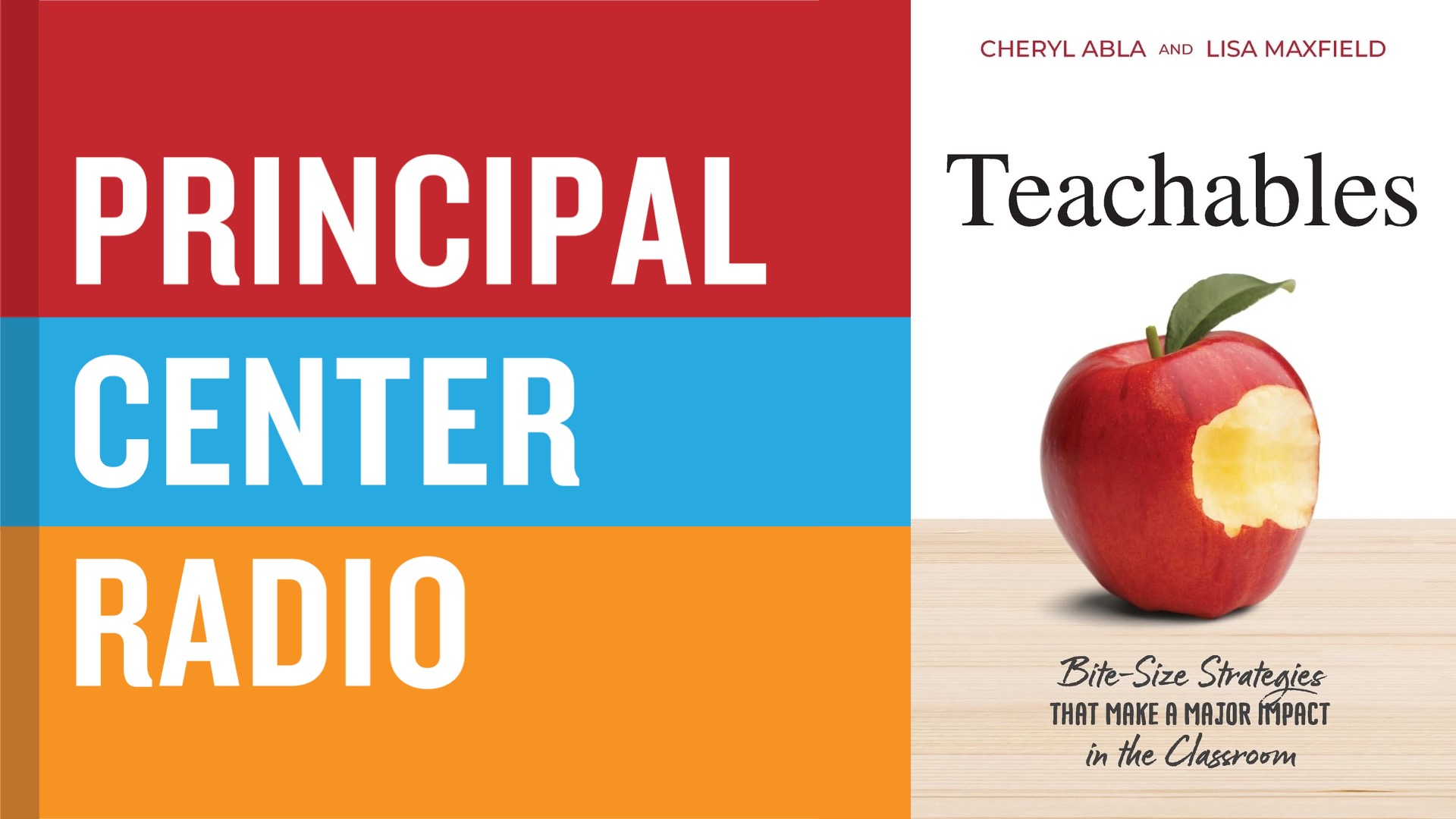
I'm your host, Justin Baeder, and I'm honored to welcome to the program Cheryl Abla and Lisa Maxfield. Cheryl Abla brings over 30 years of experience in education, partnering with schools and districts across the country to help teachers and leaders create classrooms where every student excels. A former educator who taught across grades 1 through 12, she brings practical classroom insight to her work, supporting instructional strategies, problem-based learning, classroom technology, teacher coaching, and multilingual learner success with a focus on simple, high-impact strategies that make learning meaningful and sustainable. Cheryl is the co-author of several books, including The New Classroom Instruction That Works and Tools for Classroom Instruction That Works, and she's written numerous Edutopia articles focused on engagement, belonging, and effective instruction. ... ... ... ... ...
[01:29] Announcer:
And now, our feature presentation.
[01:32] Justin Baeder:
Cheryl and Lisa, welcome to Principal Center Radio.
[01:35] Cheryl Abla:
Thank you so much, Justin, for having us. Yes, thank you.
[01:40] Justin Baeder:
Well, let's start by talking about what teachables means. What is a teachable, and why is that idea kind of the center of this book?
[01:48] Cheryl Abla:
Well, Teachables is a book that can help teachers implement quickly and easily strategies, techniques that can really make an impact in the classroom because they improve student engagement and give teachers resources with QR codes to watch the strategies, to understand the strategies. And to be able just to read a quick section if they're working on something specific they want to implement in the class. If they know they need more student talk, then this is a quick way to just look at and get some quick ideas to incorporate into the classroom. And we wanted the book to be something that was easy and didn't take a lot of time to read through a whole lot of research, but really to get right down to the how.
[02:41]
to improve engagement, relationships, um, organization in the classroom. And all of these came about because of Lisa and I being in classrooms and working with teachers and hearing from them that they needed more ideas and ways to engage students. So, we wanted to give teachers a quick resource that was easy to thumb through and pull out ideas and implement that day or the next day.
[03:10] Lisa Maxfield:
One of our goals was that a teacher can pretty much open the book to any page and be able to implement one of the strategies or the recommendations within a strategy, again, the next day or that day with little to no prep. There are some that have some prep, but the majority of them are, let's just go and try this. And... reiterating what Cheryl said, is you literally read a paragraph, maybe two paragraphs of an intro to the strategy, and then you get right to numerous recommendations that you can choose from.
[03:43]
And it's all the way from, um, you know, K to 12, and all the different content areas as well, we have examples for.
[03:51] Justin Baeder:
So the, uh, the four major kind of pillars of the book that you've organized it around are relationships, organizations and procedures, curiosity and engagement, and high expectations. And I'm thinking about how often we think about the overall expectations for teachers that you might see in evaluation criteria that might be used for your annual goal setting. Those can be very overwhelming, very big picture, very hard to get some traction with and feel like I can, you know, I can do something tomorrow that will get me the results I want, that will move my classroom forward. Talk to us about how you broke things down into small enough, as you say, bite-sized strategies that people can actually use. Because I think those, those big documents get so intimidating and even a whole book gets intimidating.
[04:41]
What is it that makes something, you know, really, uh, bite-sized?
[04:47] Lisa Maxfield:
It's really those recommendations. So, it can be something, like, the first strategy that we have in the book with relationships is greet your students. And we give probably about 10 different suggestions or recommendations on doing this. And it can be, obviously, you know, standing at your door and welcoming them. It can be...
[05:09]
finding out how to say hello in one of your students' native languages and using that each day as a different way, offering the high five, you know, that type of thing. But that's one of them where they're those small, bite-sized strategies, but it's going to make such a huge impact because you're starting to build that relationship with those students. And as you're building that relationship, then later on, when one of those kiddos comes walking in, not looking like they're having a great day, You might be able to quietly go over to them and say, hey, you know, is there anything you want to talk about? Anything going on? And because you've done that and they know that you're welcoming them and you're glad they're in the classroom, that's going to be able to help with that conversation with that student. And it might just be something, you know, really simple, like, you know, I jumped in a puddle and got my mom's shoes wet on the way here and she got mad at me.
[06:02]
You know, if we're thinking something simple like that. But then they're able to get it off of their chest. But because you've built that relationship, it's gonna help.
[06:10] Cheryl Abla:
And I want to just tag on to what Lisa said. Those four components, we always talk about if we're doing a quick little workshop or if I'm there every month with teachers working in their classrooms, these four pillars are really the foundation of any teaching. And they have to be solid before we can get into... You know, great learning objectives and success criteria.
[06:38]
Or, I often say it could be... A teacher could have the cutest little Pinterest classroom, and it looks like a place we all want to hang out. But if we don't have those four...
[06:49]
Components down solid with strong relationships, procedures. We can never get to the level of learning that we need to get to. So, before we do really any workshop or any... We're working just on, um, specifically breaking down standards or helping teachers understand what's priorities to teach.
[07:11]
Really talking about these four being... need to be present, um, before we can get there. We always say, you know, kids don't know how much you care until they, or don't care how much you know until they know how much you care. And, um, just how do you do that at the beginning?
[07:28]
You know, collecting surveys, asking students, how do you learn best? Um, and then taking that information that you gain and applying it for the rest of the year or that semester.
[07:41] Lisa Maxfield:
Also, the four components we have as, uh, are the, you know, the framework and for our visual is a tree. So, for the relationships are the roots, the organization and procedure are the trunk, and then curiosity and engagement and high expectations are the limbs, the... But you have to start with those relationships, like Cheryl mentioned, until you can get to getting those kids with high expectations, because they need to know that you truly believe that they can succeed.
[08:14] Justin Baeder:
Well, let's talk about high expectations a bit, because I think whenever we have, you know, big categories of teaching that we're trying to help someone think about, especially a new teacher, sometimes they pursue that category
[08:29]
in kind of the wrong way. Like, high expectations, you know, is not something that you can pursue completely directly, right? Like, you have to do different things along the way to get to high expectations. And sometimes in their eagerness to have, you know, high expectations now, you know, I don't want to have to have put the pieces in place weeks ago. I just want to crank up the expectations now, you know, in mid-October when I realize I need to. Um, how do we help people...
[08:55]
Break down that big-picture goal and not try to shortcut to it the wrong way, but put those fundamentals in place.
[09:04] Cheryl Abla:
So, when I think about high expectations, it's not more work, um, because sometimes I think those students that maybe finish early, teachers think, well, I'll give them some more problems, you know, to do, or I'll... But it's really being intentional about, first of all, knowing where your students are. So that you can take them and grow them, no matter what they come in with, you can take that and, and grow. So I celebrate growth, um, with teachers over, you know, everyone getting to grade-level reading or something like that.
[09:41]
But being able to know if there are students in your class that need a little extra enrichment here, or maybe they're really strong with their writing skills. And then finding, um, different activities that they really want to do that, if they do finish a little bit early, they can go, right, and work because they're passionate, they're excited about it, and they want to work on it. And then they'll want to take what I see. Students want to take it home. They want to work on it. They want to come back.
[10:11]
They want to showcase it. They want to share it with others. Um, but it's also just a belief in... in students that they, um, can reach the goal.
[10:23]
And it's a lot about goal setting and letting students be, being very transparent about where students are. Coming in when we do those benchmarks at the beginning of the year, no matter what grade level they're in, letting them know where we are starting, and having those really heart-to-heart conversations about Where do you want to go from here? What would you like your next goal to be? And then let's make a plan of how we're going to reach that. But I think that gives the students a feeling that we believe in them, that they can do it. But then finding those different pathways, um, for students to reach that goal and to have that, um, you know, also have high expectations for themselves and that growth mindset.
[11:07] Lisa Maxfield:
And I would say it's... High expectations aren't about, I'm going to make this harder for you. It's that I believe you're capable of more, and I'm going to help you get there. And like Cheryl just said with the goals, how are we going to get there setting those goals?
[11:21]
But it's not, I'm just going to make this harder. That's not the high expectations. It's, I believe you can do it. Let's talk about how we're going to get there.
[11:29] Justin Baeder:
Follow up on that on kind of a similar vein. Thinking about structure and consistency and routines and procedures, how do we as leaders think about helping teachers, you know, put those routines and procedures in place without making their classroom feel, you know, hyper-rigid or overly controlled? How do we get that balance in the classroom? How do we promote that balance with teachers? Because I think especially with new teachers, you know, Our feedback can carry a lot of weight and can kind of push the pendulum really hard in a different direction. So, you know, maybe someone does have a student-centered classroom and we like some aspects of that, but it's also, you know, maybe there's some room for tightening things up and having better procedures.
[12:14]
Um, any advice for principals?
[12:16] Cheryl Abla:
I've spent the last couple weeks in classrooms and, uh, just, yeah. So, some I've coached before and things I'm seeing. So, um... What I was thinking as you were asking that question, Justin, was, um, I think that teachers need to understand the why.
[12:38]
Initially, why do I need a work all up? Why do I need to have a procedure for when you don't have a sharpened pencil? Um, do I have a procedure with when absent work? But helping them understand that instruction is key. Bell-to-bell instruction is so, such a priority. And if you can review, teach, and review some more of those procedures at the beginning of the year or mid-year, I even say if the wheels are starting to fall off, stop, re-teach, go back, and we, we practice till we get really solid in those strategies and those procedures.
[13:16]
But, um, sometimes there is a feeling that whenever you go into a classroom and You can feel it, you can see it, that they're... All the procedures are not solid. And then, what can you do to really help teachers...
[13:36]
understand that, the feel of the classroom. The kids are coming in, they're not real sure which book they're supposed to be grabbing, and they're not sure if they're supposed to have paper or their notebook to get started with the writing assignment. But having them practice that, understand it, and making everything be accessible. When someone needs to take a restroom break, they don't come up to you. You've got a signal, you've got a... And they know if you're teaching, never ever do they ask for that.
[14:09]
But whenever there's that quiet time, they may stand by the door, you know, and give you some signal. Or so many of my schools now have a little checkout system, and they have a procedure for that, too. But, um, those have to be... really smooth for that great instruction to take place.
[14:29]
And also the student talk, because we want a lot of academic talk in classrooms, and you have to have procedures for coming back together after you discuss something, and to stay on topic when you're... And all that goes back to modeling and practicing. And with teachers, so often I...
[14:50]
I show them pictures, I show them videos, but then I say, okay, let's show the students videos of how reciprocal teaching should look, feel, and sound so that they can see it before we start practicing it. So, having those good and solid and in place will make the rest of the year go well, because if not, March, April... things are really hard for everyone. And, um, if they're good and solid here at the beginning of the year, then it just, it carries through all the way.
[15:23] Justin Baeder:
When it comes to working with veteran teachers, often addressing these types of issues gets a little bit awkward, especially if they are around some of the basics. But I don't think it's unusual at all for someone to overlook a particular thing in a particular year, right? We move on in our professional focus. We have different goals. We're thinking about this and not that, and maybe last year, I had just read The First Days of School by Harry Wong, and I had all my routines and procedures really dialed in, and this year, I just forgot about certain things. So, school year is underway, I'm not a new teacher, and I need some help.
[15:58]
How do you think about the principal's work of, you know, pointing a veteran teacher who may be a little bit embarrassed to have some struggles in this area, uh, how do you think about that, that principal's challenge?
[16:10] Cheryl Abla:
Whenever I'm thinking about veteran teachers, it is a little touchy, and I can admit that. But what I have personally found that seems to bridge that without pointing it out or making that veteran teacher feel a little less than is to do teacher walks. And that way, we get into other classrooms, and we might be looking for something specific. Um, how do they, you know, break down objectives? How do they, um, procedures? How do they line up?
[16:42]
How do they go to lunch? All those little pieces... But when you go into classrooms, I say, really, just sit back and look. Just watch.
[16:50]
What do you notice? And then, so often, they'll be like, I used to do that. I just... I forgot.
[16:56]
That is so effective. I just, you know, tend to forget about that. So it almost takes care of itself. Um, and then if by some chance it, when we're debriefing, it doesn't come up, then I might just say, what'd you guys think about the way she, you know, asked questions? So just a few kids wouldn't raise their hand. What did you notice about that?
[17:16]
But then maybe if they didn't quite say it or see it, then I want them to, to come to that realization a little bit on their own so they have more buy-in.
[17:28] Justin Baeder:
Yeah, I love that idea of getting teachers into each other's classrooms to, you know, see what's working for someone else, to see things that maybe they used to do that they forgot about or stopped doing for some reason. I will say the thing that I like least about getting teachers into each other's classrooms... is that it's so easy to focus on what that other teacher has in their classroom that I don't have in my classroom that's surely making all of the difference. You know, the major difference between our teaching is that you have this pocket chart or this shelf or this, you know, piece of furniture or whatever.
[18:00]
How do we... How do we help people focus on the transferable insights about practice, you know, the what I can take back with me to my classroom? Because I think there's just a very powerful temptation to say, well, you know, they have some sort of unfair advantage or something.
[18:16] Lisa Maxfield:
And they have easy students, right? Oh, of course.
[18:18] Cheryl Abla:
Their students are smarter, better behaved.
[18:21] Justin Baeder:
Absolutely.
[18:23] Cheryl Abla:
That happens all the time, you know. Well, it's that quiet pencil sharpener. That solved everything. It was, you know, a really fancy... Whatever it is, but they do...
[18:33]
So that's why it's kind of nice if you do have a few look-fors, just to mark, did you see it? And then how is it effective? It kind of helps them focus on what they're looking for. And it might just be, how do we transition? From... With littles, floor to seat, seat to floor, how do we transition from... With our high school and middle school students around, um, turn and talk, something very basic.
[19:02]
How do they do that quick and then right back to focused instruction? But that tends to kind of bring... Because if it's too broad, and I have done the broad because I just want them to get into each other's room, but you are 100% right. They get fixated on...
[19:19]
They have this, this, and this, or their kids are different. So, um, the little checklist and focus pieces do tend to help that problem a little bit.
[19:28] Justin Baeder:
And I think that's especially helpful when the secret to success is something that the teacher already did prior to the observation, like teaching expectations, practicing, reinforcing, you know, having a system in place. And often, when people observe each other, they expect to see some sort of magic right before their eyes that isn't necessarily going to happen right before their eyes, because maybe the magic happened in advance. And, uh, you know, if we're working with a new teacher, they may not have a sense of what that looks like, and if it's a veteran teacher, they may say, oh, yeah, I can tell they really put a lot of effort into teaching and practicing the routines and procedures based on how smoothly they went, so I don't need to, you know, yell louder when I want them to transition quietly. I need to practice, and...
[20:12] Cheryl Abla:
And I... Something else that does happen, Justin, that has happened to me a few times, is when these teachers go into different classrooms, I'm thinking middle school, high school, they see the same students they teach acting 100% different.
[20:27] Justin Baeder:
Yes.
[20:28] Cheryl Abla:
And I've even had a couple go up to a couple students and say, why are you so different in this class? And I'm like, oh, we'll talk about that later. You know, we'll debrief that later. But that has happened so often, and I see it because I'm in all their classrooms. So, the change of personalities between class to class and just that, it goes back to that environment that teachers created. So, that's why those debriefing sessions are so good, even if they're in a small group, but one-on-one with certain teachers sometimes.
[21:03] Justin Baeder:
Lisa and Cheryl, I think many of the topics that we've discussed so far around relationships, routines and procedures, high expectations, will be completely expected, right? Those are the things that we would consider some of the fundamentals of teaching. I want to talk now, as we approach our close, about curiosity and engagement, because that is one major component that I think people may not have been expecting to see. Why is curiosity so important to teaching?
[21:34] Lisa Maxfield:
I think it's so important because you have to keep those kids engaged and loving to come to school. At some point in time, you know, a lot of kids just get that, ugh, I don't want to go to school or I have to go to school. And I told Cheryl a while ago, my grandson, I said, you get to go to school. And he was like, you know, he's only five. He was only five. And I said, you know, there are a lot of people, children, who don't get to go to school.
[22:04]
And he was like, what? And he was, like, so shocked. And then he asked if when he was grown up, if he would be able to help so all those kids could go to school. But that's one of, um...
[22:15]
It's a key word. It's a difference between I get to go to school versus I have to go to school. And I think if you're having those engaging classrooms, you're building those relationships, the kids know what to expect when they go into the classroom. They're going to love coming into the classroom, and I think that's going to keep that engagement really high, and when you've got that engagement, there's that curiosity that is going to follow right along. And also, there are the things, the times where you might get off topic just a little bit because a student asked a question that...
[22:51]
is really pertinent or really just thought-provoking, and maybe you're going to take some time and just say, you know, we're going to take just a few minutes to talk about this, and then we'll put a pin in it, but that was a really great question, and giving that positive reinforcement as well, so other students realize, you know what? We can... ask about some other things. We can have that wonder wall.
[23:13]
For example, we're going to go put something up there now that we chatted about it. But I think that's, you know, it's that keeping them engaged, I think, is going to keep that curiosity going there as well.
[23:28] Cheryl Abla:
And I really like teachers to love coming to school. I always say, if you like coming to school, your students are going to like coming to school. And teaching and learning should be fun. It should be fun, and it should be joyful. And, um, helping especially new teachers or maybe a teacher that has kind of lost that spark, um, understand the power that they have with creating that environment that gets them curious. And, um, I just, Lisa and I had done a little power, a little power teaching 15-minute video with, with folks the other day about how do you start the day or the class period.
[24:12]
And it's a perfect time to build in curiosity. Whatever you're teaching, you can put up a short image or a video clip or or, um, have puzzles out on their table when they come in because you can grab their attention right away and it's not sit and get and do a bellwork little worksheet because it doesn't even pertain to what we're getting ready to learn or we did learn, but making it relevant to where we're going so that they want to know more and they're excited about going there. So I think part of it is just creating that That little hook to get them interested and then giving them the freedom to be able to ask the questions. And like Lisa said, it may go off script for a minute. You know, they want to...
[25:00]
I mean, I remember when I was teaching about germs and all these things I needed to teach about in fourth or fifth grade. I can't remember. And then... We got into, one of the big questions was, what's a pandemic, and how do they start?
[25:14]
I believe it was fourth grade. And, great question. But, oh my gosh, I could have spent the rest of the, you know, morning talking about that. But like Lisa said, if you just put a pin in it, And we had little wonder walls that are in our book, too, but just being able to put that up on a post-it note, and we're going to get back to it. So when you have three or five minutes later, you can pull it up, and we can research. Where does pandemic... Where do they start?
[25:42]
And if I mean, I even remember the student, it was Annie, you know, is the one that asked the question. And Annie can create the PowerPoint about it and then bring it back and we can, and she can teach us where they start, too. But, um, I just think that that's part of that personalization and going there with, with kids. And, and a big part of it is just having a good time. I unfortunately heard from some of my new teachers I work with that they had been told by someone that you're supposed to be mean till Halloween.
[26:16] Justin Baeder:
I heard that this week.
[26:18] Cheryl Abla:
Well, and I've heard that one before, but I'd never heard mean till Halloween.
[26:21] Justin Baeder:
That's taken it pretty far, yeah.
[26:24] Cheryl Abla:
So I'm like, I have never heard that, honestly, and I'm in thousands of classrooms. I said, I love the term warm demander much better. You can love those kids upside down over, you know, and let them know that, but you have to have those high expectations and bring joy. You can smile. It's okay to smile, you know, to let them see you're happy and a little bit of... Be a little vulnerable, you know, and be yourself because you'll build that relationship with them, too.
[26:54]
So, all that plays into that enjoyment and fun and curiosity piece, too.
[27:01] Justin Baeder:
Absolutely. So the book is Teachables, and you've also created a field guide for Teachables. I wonder if, just in closing, you want to talk a little bit about how school leaders might use those together with their staff.
[27:14] Lisa Maxfield:
Sure. So we created the field guide because we were, we were getting questions about, you know, how can we use this as a, like, a book study. But it's more than just that, the field guide that we created. Because at the end of the book, we have some book study, um, questions. But with the field guide, it's, let's look at strategy, choose a recommendation, go back and try it. Now come back and talk about it with your colleagues.
[27:39]
What worked? What didn't work? What might I try differently? What did you try? So, it's a really internal professional learning as well as getting that. And again, it's not, it's not your typical book study where you, I mean, we do have it about reading all, but you don't have to read it cover to cover.
[27:58]
You can say, okay, we're going to look at this one. I want to look at that strategy, um, you know... Great to see you. And we're going to work on that and see what we're going to do.
[28:08]
So that's how the, the field guide plays into it being more than a book study. And we have it all written out, uh, for a full year or six months. You just have to get the book and then we've got everything else, um, ready for you. So there's no additional prep for administrators to have to do either.
[28:28] Cheryl Abla:
And one of the things I like about it, because I've been in many a book study, um, as a teacher, and it's, it's so much more than that because we wanted to make it really usable and to transform classrooms to be... more engaging. And I like that they have to set goals. They get to pick, but they also get to discuss and talk about what worked, what didn't, and then hear from one another so that they can either tweak it or try something different, but they have that processing time to be able to Um, really implement and see if it does have an impact in the classroom.
[29:08]
So, um, it's more actionable, I guess, than some of the book studies that I've done in the past. And that, that was really our goal, too.
[29:19] Justin Baeder:
So the book is Teachables, Bite-sized Strategies that Make a Major Impact in the Classroom. Lisa and Cheryl, if people would like to get in touch with you, where are some of the best places for them to go online?
[29:30] Lisa Maxfield:
So, our email is teachablesbook@gmail.com. We both have LinkedIn, Twitter, X, Instagram, and then within the book, we have a QR codes that'll go to our website as well. So, we do have a website that people could go to to get resources and videos, etc.
[29:58] Justin Baeder:
Link in the show notes. Lisa Maxfield and Cheryl Abla, thank you so much for joining me on Principal Center Radio. It's been a pleasure.
[30:05] Lisa Maxfield:
Thank you so much for having us. We appreciate it. Yes, thank you, Justin.
[30:14] Announcer:
Thanks for listening to Principal Center Radio. For more great episodes, subscribe on our website at principalcenter.com slash radio.