Announcer (00:01):
Welcome to Principal Center Radio, helping you build capacity for instructional leadership. Here's your host, director of the Principal Center, Dr. Justin Baeder.
Justin Baeder (00:12):
Welcome everyone to Principal Center Radio. I'm your host, Justin Baeder, and I'm honored to welcome to the program Muriel Summers. Muriel Summers is an award-winning principal who twice guided her school, A. B. Combs Elementary in Raleigh, North Carolina, to being named the top magnet school in America and the original leadership school featured in Franklin Covey's Leader in Me, which we're here to talk about today. She's been recognized as Teacher of the Year Principal of the Year with an honorary doctorate, the William and Ida Friday Award for Leadership Innovation, the order of the Longleaf Pine given by the governor of North Carolina, the University of North Carolina at Chapel Hill Award for Leadership in Education and the Ralph Kimmel Award, North Carolina's highest honor for principals.
(00:52):
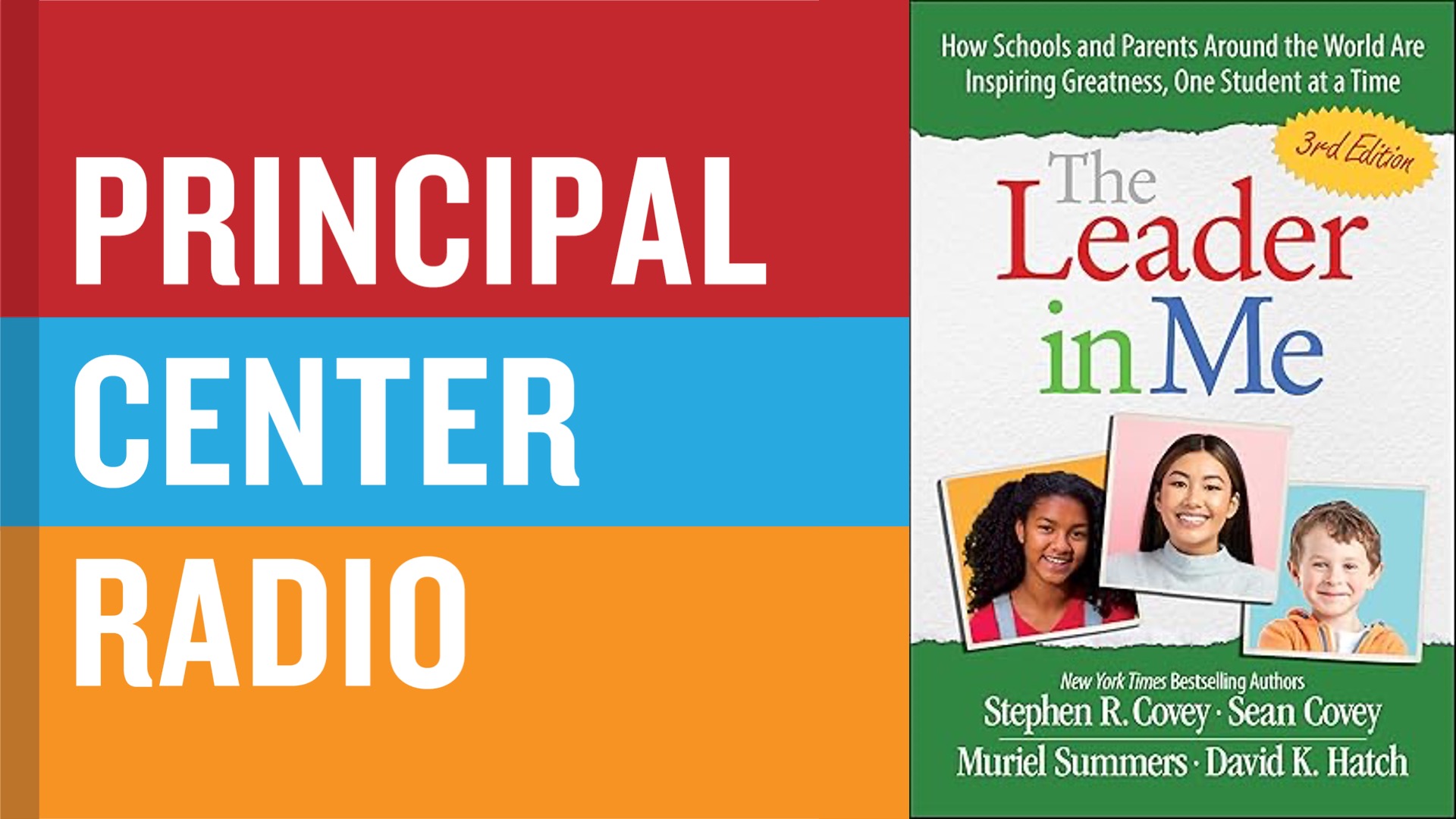
She now serves as the global ambassador for Leader in Me and as the co-author with Stephen R. Covey, Sean Covey, and David Hatch of The Leader in Me: How Schools and Parents Around the World are Inspiring Greatness, on student at a time, now in its third edition.
Announcer (01:08):
And now our feature presentation.
Justin Baeder (01:10):
Muriel, welcome to Principal Center Radio.
Muriel Summers (01:13):
Oh, Justin, thank you so much for having me. What an honor this is. Thank you.
Justin Baeder (01:18):
I'm excited to speak with you, not only from a leadership perspective, but also from a parent perspective because my own kids went through a leader in me elementary school. I wonder if we could start by just talking about what that means. What does it mean for a school, particularly an elementary school, to be a leader in me school?
Muriel Summers (01:37):
Well, I'd like to start by sharing with you that this was, and I don't call it a program. It is not a program. It is philosophy, but it resulted in asking our key stakeholders. AB Combs was a failing school 25 years ago. It's flourishing now, but it wasn't always that way. And so we went to our key stakeholders to ask them, "What is it that you want for parents?" It was, what do you want for your children? What kind of education do you want for your children? For business leaders, what kind of students should we be producing so that they're ready for the workforce? We went to university professors and we asked them, "What do we need to be doing at an elementary level to prepare students to be productive students on a collegiate level?" We asked teachers, "What is it that you want from your students?" And we ask our students, "What is it that you want from a school?" We took all of that feedback and that is what is now known as Leader in Me.
(02:53):
So much of what I heard when Dr. Covey spoke in 1998 in Washington, DC, when he talked about these habits, when he talked about the skillsets that outstanding leaders and when he said that it was referenced everyone can be a leader. Leadership is not for just a few, it's for all. And when he talked about this operating system of leadership, I kept wondering, good gracious, could this help me in this low performing school, a school that was a declining enrollment, could we as a community take these habits and embed it into the curriculum? That was the start of what is now known as a leader in me. Every single habit that Dr. Covey and it was all of them that he talked about, I sat there listening with the head of a school administrator and the heart of a parent and thought, "Gosh, how different my life might have been if I had been exposed to these habits much earlier in my life." So before a leader in me ever was leader in me, the staff at AB Combs, the community, the parents, business leaders, we all came together and looked at Dr. Covey's work and started to draft a blueprint, if you will, of how we would go about teaching it.
(04:27):
So that's the history of that. But what we found just in very quickly, children can lead at very early ages and they want to lead and they want to have a voice and they want to feel a part of the school. And that's what Leader in Me enables a school to become. It enables a school to start to look at ways that you can involve every single one of your children so that they feel seen and known and loved. I would like to say that leadership is an operating system if you will, in a school. And you having been a principal and advocating for principals and consultant, you know that the key to success is always in the systems you create and we created a system to teach leadership to young children and that system has been replicated all across the world. There are over 8,500 schools now and over 28 countries I think I'm correct on that, that are following the same framework if you will, which is the beauty of Leader in Me as well.
(05:52):
There is a framework by which educators can use to implement leadership culture and academics into the curriculum.
Justin Baeder (06:03):
I have a different history with the Covey world, but going back into the 90s also, I had the privilege of TAing for our athletic director, Coach Glenn, for a couple of years and he was a big Franklin planner user and I remember reading The Seven Habits also in 1998, except I was working at theme park at the time, had a summer job after high school and I remember sitting there on my break in my work uniform, reading that book and I don't know that I made any immediate connections to educational leadership because I didn't know why I was going to end up there, but definitely it stuck with me and it's been very interesting to see that take hold in schools. There's an assumption that people may not have when it comes to leadership, when they say things like, "Well, that student is just a natural leader or a born leader." There's an assumption in the leader in me that leadership is teachable.
(07:05):
Talk to me about where that belief comes from.
Muriel Summers (07:09):
Well, I think it comes from Dr. Covey's definition of leadership, that leadership is communicating someone's worth and potential so clearly that they're inspired to see it in themselves. I think you and I both as well as every educator out there has a teacher that they remember that communicated their worth and potential so clearly that they were inspired to see it in themselves. And my goal as a principal, because of my history, I had one teacher who so believed in me and a school counselor that questioned my abilities and the teacher who believed in me left her heart print on me and has guided my career for almost 50 years. She has since passed away, but she is still very much a part of who I am. I think that is the essence of a great teacher that they live on as long as you live on and remember them in that way.
(08:20):
A school counselor, however, didn't communicate my worth and potential and that left an open wound, honestly, Justin, that has never healed. And I have spent most of my career all of my career actually making two women proud, my mother and Ms. Rose, my favorite teacher. My father passed away when I was very young or I would have included him and I still want to make him proud regardless, but also proving my school counselor wrong. And I thought if I can ever become a teacher, I will make sure that I make every child regardless of their abilities. Every child has genius. That's part of our core paradigms in the leader in me that every child has genius. It may just present itself differently. For some, it's academics and unfortunately that's the one key measure, almost the only measure we use, unfortunately, to determine someone's ability. But we know you being a principal and a father, that children have genius in other ways.
(09:38):
So that to me is what this whole leadership, helping students realize you're more than a score on a piece of paper, you're so much more than that and we're going to help discover your interest and your passions and we're going to give you opportunities to grow in those areas that you enjoy most or that you're most passionate about, whether it's art or sports, science, kindness and compassion, service learning, every child has genius. I mean, that's why Leader in Me schools flourish because we look for other ways besides academics. Yes, that's our core business, but it's not all of what we do. So leadership very much has emphasis as does math, reading, science, and social studies. It weighs the same. Yeah.
Justin Baeder (10:39):
The listeners and especially anyone who follows me on social media will know that I'm pretty skeptical across the board about anything that is not academic content. I'm a very academic content focused person and that's just part of my philosophy, but I think something that gets overlooked quite a bit in discussions of how to improve student learning is the angle of students themselves, what they believe, what effort they apply, how they see themselves, the effort they put forth, the hard work that learning takes. And I believe if we do want to have high academic achievement, we're not going to get there by only focusing on what adults do. There has to be a student component that shows that we believe in our students, but gets them to actually do something, right? Education requires that the students actually play an active role in their learning. And I'm wondering what you see as that theory of action, that connection, because I think probably the program would not be successful if schools were told, "Hey, this is important in addition to academics.
(11:49):
Don't worry about academics, just focus on this leadership stuff." If there was no connection there, that wouldn't work, right? People would not get on board. What do you see as that connection between developing students as leaders and the academic results that we're here for, that we're in the business of and that we're accountable for?
Muriel Summers (12:04):
Absolutely. Well, part of our framework are the three pillars of leadership culture and academics and academics again is our core business, but students will not learn to the highest level and I believe this with all my heart until they feel that someone cares about them, that their teacher has taken an interest in them. Confidence, a student's confidence is one of the number one indicators of academic success. They go hand in hand. So how do we help all children, all children feel confident, cared about, that they feel that they belong and their voice matters. I have data to support that when every child, again, putting a system into place, when every child has opportunities to participate in a school actively, their academic scores begin to rise because they feel that they have a place in school. They feel that learning is important. So many children Justin right now are coming to school with a lot of baggage and we've got to deal with that baggage before we can ever help them grow and thrive academically.
(13:28):
But what I see is that when both of these things joined together, woven together, as I said, leadership, the culture, the academics, you are providing students with a very strong educational foundation that will serve them well for the rest of their lives. Well,
Justin Baeder (13:48):
Let's talk a little bit about what that looks like in a Leader In Me school. And as you mentioned, there are many thousands of them now. Yours was the first.What does that look like?
Muriel Summers (14:00):
Well, we have evolved over the years and it's quite interesting when students started to learn the Seven Habits as early as four and five years old, of course their parents knew we were implementing this work. The students would go home and they would talk to their parents about needing to be more proactive or I think perhaps you might want to sharpen the saw mom because you're a little bit stressed out. So when the children started to go home and speak the same language that some of our families were being exposed to the same work at the same time in their companies, we really started to see something incredible happen there. It's just this feeling that you have the moment you walk in the door because what you see are children leading 68% of the work that goes on in any school, regardless of any level, can be done by the children who attend that school.
(15:07):
So if you keep that reference point in your mind, "Okay, what is it that I'm doing right now that a student could do? " And you shift your paradigm.
(15:19):
Franklin Covey has an incredible goal setting initiative, if you will, that teaches children at a very early age how to set goals, how to develop action steps to achieve those goals, how to monitor your goals along the way and then have an accountability buddy, if you will, to help you achieve those. And that goes hand in hand with academics and also the personal goal that a student may have. Most students in Leader in Me schools have an academic goal based on where they're performing, but also with the understanding that my contribution, my individual contribution can guide what my classroom performance looks like, can guide what my grade level performance looks like, can guide what my school's performance looks like. And when children at a very young age can begin to see how important it is to set and have a process for achieving goals, everything for that child just becomes enhanced.
(16:35):
Their academics become enhanced and their personal goal, whether it's sports related or anything that a child is interested in personally that they can set a goal toward, they learn that process. So that's what you see that's you hear children actively engaged engagement is very high in Leader in Me schools. Project-based learning is also very high in Leader in Me schools. So there's this feeling that you just have the moment you walk in and it's a feeling of also love that children are loved in these schools and are recognized for their efforts.
(17:23):
High academic standards are just a given, but when you enhance them with these other things around it, it even takes it to a higher level. Yeah.
Justin Baeder (17:33):
Absolutely. Let's talk a little bit about what that looks like on the adult side because certainly what we're talking about sounds great. It would be lovely if every school felt that way, but that doesn't happen just naturally or by accident. How do you get the adults there and who do you consider when you're thinking about the adults in the building?
Muriel Summers (17:56):
Well, certainly the teachers are the first people that I think of. We all went into education for a reason. We wanted to make a difference. We wanted to influence someone's life like our life had been influenced. When we did research on the other book, Teacher Believed in Me, it was amazing. Everyone that we interviewed in over 12 different countries, it was always a teacher, the relationship that they have with their teachers. So our goal is to help teachers reconnect with their why, their purpose, their why, also to remind them of the incredible influence that they have on the life of a child.
(18:49):
I would say they're the first ones that I think about when you say adults. Also, our parents have benefited tremendously in Leader in Me schools when the Seven Habits of Highly Effective Families was offered for them to them as a parent education kind of offering. So when you're building a culture, if you will, of everyone trying to do their best to be their best, whether it's as a teacher or as a parent, you start to see this incredible culture begin to form and that certainly was the case that A. B. Combs continues to be to this day as well as other Leader in Me schools around the world. It's everybody being educated in the same language, if you will, of the habits that I think is the thread that ties us all together.
Justin Baeder (19:52):
Yeah. Language was something that I was going to bring up because that I think is one of the most striking things that you encounter when you're working with a leader in me school, when you're talking to a student or a staff member at a leader in me school, is you hear specific language that you don't hear elsewhere. What are we getting and what are we leaving behind when we adopt that language? Because I feel like that's probably very intentional.
Muriel Summers (20:17):
Oh, it is very intentional. We have language in all of our curriculum areas as well, do we not? When I think about what is the language of literacy, what is the language of mathematics, the language of science, there's a language of leadership. When children understand that I lead myself, I'm responsible for the choices that I make, it changes everything. There's a lot of blaming going on in schools, pointing the fingers going on in schools. A child would say to me, "Well, mama or my daddy forgot to pack my homework in my book bag." And I'm like, "Whoa, wait a minute now. Who was responsible for that? " And so you start to use a language, honestly Justin, I don't know that I could lead a school without this. I don't even know that I certainly would not want to, but if someone told me, "You can't bring this into the school," I wouldn't go there because I don't even know how I would operate because I know the impact and I know the results that it has.
(21:34):
I'm not here talking with you today to sell you. I know I'm just here to talk about what I have seen that works and if I may share the language, if you will, giving the children voice and how deeply rooted that becomes in a student who's been immersed in this work for a while. LinkedIn presence really still don't know how to navigate all of that, but the beauty that's come out of it as I've heard from students who are now in the workforce and one student I heard from as recently as two weeks ago who now leads city planning in one of the biggest cities in North Carolina and have not heard from this child since she left back in 2000.
(22:33):
She's now leading the way in this big city here in North Carolina and she reminded me of writing me a letter when she was in fourth grade requesting a teacher she wanted to have in fifth grade and she learned that we said, "Be proactive, advocate for yourself, use your voice. We want to hear what you want. We want to hear what you say." And that's part of creating this culture of this common language. The bottom line, she wrote me the letter, called her into my office and she's reminding me of all of this. I thank her for writing the letter. I told her all the teachers at AB Combs were great, but if it was that important to her to have this particular teacher and she could defend why it was important for her to have that teacher, then I certainly would consider it. She got the teacher that she requested, but it wasn't about her getting the teacher.
(23:39):
That wasn't the end goal. It was about her realizing my voice matters and I can advocate for myself. And she said that that one thing had served her well all through her schooling and now in the role that she plays. I don't think she remembered too much about what she learned and other things, but what she learned was to take what she learned and to apply it and have a voice, give a voice to it. Don't we want that for all of our children, for everyone to feel that their voice matters and that they matter and that they can make a difference? I have hundreds of stories, honestly, of students who have taken the greatness, their passions, their skills, their talents, and are now in the workforce doing very, very well, but packed in that toolkit, if you will, of those high academic expectations are also those seven habits that they say help to navigate them to be the most productive versions of themselves that they can possibly be.
Justin Baeder (24:59):
And it strikes me that maybe part of the secret here is that by explicitly teaching these seven habits, by explicitly teaching and modeling the language of Leader in Me, or kind of decoding for students, especially from lower income families, a lot of what more privileged students pick up naturally from their families, right? Like the idea that you should write a letter to advocate for something that you want, that's an idea that more privileged kids are getting at home, but we're making that accessible to everybody. We're explicitly teaching that. Is that right?
Muriel Summers (25:36):
I would push back on that a little bit if I may, because what I see, yes, children from privilege have opportunities that children from poverty do not and we need to work on that and that's what I think Leader in Me does. It helps to level a playing field, if you will, that regardless of socioeconomic status that you can become, you can become more than what you think you can become That's very important, but we have found that children on all ends of the spectrum, very busy families, very ... A lot of times one of the parents, if not both of them, are gone from the home a lot. And so we just want to make sure that regardless of a child's circumstance that they feel that there is hope, they feel that their voice does indeed matter, that they can ... Ms. Rose said to us every day, Justin and I grew up in rural North Carolina, the granddaughter of a cotton farmer, and most of the people in my county were either the sons and daughters of meal workers or cotton farmers.
(27:02):
Graduation rates weren't high back then for high school, but we had a teacher that told us, Ms. Rose, doesn't matter where you come from, doesn't matter how much money's in your pocket. What matters is the hope and size of your dreams, hoping that you can be this, the size of your dreams and the drive and determination to make that happen. And I have seen children because of that mantra, because of that daily understanding, I can break a cycle within my own family or within my own ... I can break cycles by having the courage to step forth and break through barriers that some children never, ever escape. I've interviewed prisoners that are in the prison system and let me tell you something. It was because no one believed that they could or that they would and because they had a father or because they had an uncle or a brother that had made poor choices, it was an assumption you're going to make them too.
(28:20):
We have to stop that and we have to create these cultures where children feel loved and hopeful and successful because when a child tastes success, they can never get that taste out of their mouth and they're hungry for more. So it is our role as educators to give all children and all means all an opportunity to taste success and once they do, everything else begins to grow and thrive in ways that it wouldn't had they not had that opportunity. We want to all be cheered for, don't we, Justin? We want somebody cheering for us. We want to hear that applause. We want to hear great job. We want to hear you can ... This isn't equality work I know you can do. Now go back and do it again. Some of us need that. Some of us need ... We all need to be told that what we do matters and have our work validated.
(29:25):
You can just see someone blossom right before your eyes when you do that.
Justin Baeder (29:31):
Now one thing I wanted to point out about the book itself is that it is written not just for educators but also for parents. Talk to us a little bit about the role of parents in Leader in Me schools and in the communication around these efforts the schools are making.
Muriel Summers (29:49):
Of course we need to involve parents more and we know in elementary school we see parents often more than we do in middle school than we do in high school and But now that the leader in me spans preschool all the way through college, but certainly with the arena in which I am in most often is a preschool through high school, parents are more involved and a lot of it is because we make them feel that they belong and that they should be there. As school administrators, it's our job to find ways to involve our parents more and you have to become very creative. COVID helped us realize that we don't have to have parents in a building for them to be involved. We can do Zoom parent engagement nights. In fact, the highest parent involvement we had in my tenure at AB Combs was during COVID because we redefined the system for how we educate and involve our parents.
(31:00):
For many parents, school does not have a happy memory for them. So we have to address that. And so finding very creative and innovative ways to bring your parents in just increases the wonderfulness, if you will, of a school. Parents need to feel welcomed and that they matter and that we all have a contribution we can give. So it's our job as educators to find creative ways to bring parents in, but to also help them feel comfortable in serving. Never underestimate as educators the power of having high expectations for your students. Never underestimate that every child should have a role or responsibility, class leadership role, every child in the classroom so they feel that they belong and never underestimate the power of relationships in creating cultures where children are willing to take risk, that their confidence has an opportunity to grow and flourish. And so the role that we play as educators to help shape our future lies in the hands and the hearts of what we do on a daily basis with our students.
Justin Baeder (32:32):
Absolutely. I think we need to hear that message of high expectations again because I think we maybe took our foot off the gas on that. Maybe in response to the pandemic, I think there was a need to think differently for a while, but I'm just really seeing the need to reemphasize high expectations and believing in our students and believing that they can do great things.
Muriel Summers (32:59):
I mean, I just have to say this. We've got a generation of children that feel very entitled and it's about working hard and it is about drive and determination. I'm with you 1000%. We raise those expectations high and watch children work hard to meet those expectations when they're in a culture of that kind of level of support. We all worked the hardest for teachers we liked. Did we not? I did. If I didn't like that teacher, if I didn't feel a connection with the teacher, I didn't give my best. I think we all should strive to be every child's favorite teacher. And if we do, watch what's going to happen for sure.
Justin Baeder (33:54):
Very well said. So the book is The Leader in Me: How Schools and Parents Around the World are Inspiring Greatness One Student at a Time. Muriel Summers, thank you so much for joining me on Principal Center Radio. It's been a pleasure.
Muriel Summers (34:06):
Thank you, Justin, an honor to be here. Thank you for the work you do.
Announcer (34:16):
Thanks for listening to Principal Center Radio. For more great episodes, subscribe on our website at principalcenter.com/radio.