
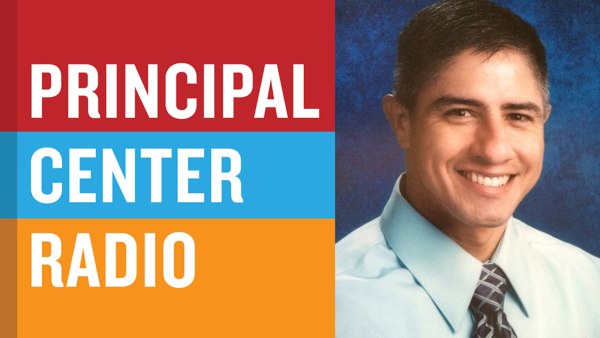
Rene Molina—The High Performance Triangle
About Rene Molina
A former high school math coach, Rene is an administrator in Saddle Mountain Unified School District in Arizona.
A former high school math coach, Rene is an administrator in Saddle Mountain Unified School District in Arizona.
[00:01] Justin Baeder:
Welcome to Principal Center Radio, bringing you the best in professional practice.
[00:06] Announcer:
Here's your host, director of the Principal Center and champion of high performance instructional leadership, Justin Baeder. Welcome everyone to Principal Center Radio.
[00:15] Rene Molina:
I'm your host, Justin Baeder, and I'm thrilled to be joined today by my guest, Renee Molina. Renee is an administrator in the Saddle Mountain Unified School District in Arizona and a participant in the Instructional Leadership Challenge. And when I saw some of Rene's comments on the Instructional Leadership Challenge website, I knew that we had to talk, and I had to have him on Principal Center Radio.
[00:39] Announcer:
And now, our feature presentation.
[00:41] Rene Molina:
So, Rene, welcome to the show. Pleasure, Justin. It's indeed an honor. Thank you. Well, Renee, in your comments on the instructional leadership challenge, one thing that really stood out to me was the way you've applied one of the big ideas from the challenge, which is the high performance triangle. And the high performance triangle, as I know, you know, combines three factors that lead to high performance.
[01:03]
And those three factors are strategy, which is what makes us effective. tools, which are what allow us to be efficient, and habits, which are what allow us to be consistent. Could you talk a little bit about how you apply that to your work and then how you've extended that even beyond what we covered in the challenge?
[01:21] Rene Molina:
Absolutely. As you kind of touched on those three vertices of that high performance triangle come together, That was something in my practice here as an assistant principal. I guess a good example is our new electronic walkthrough form that we've just adopted here in our district. So that was the tool that I was using, and through taking this 21-day challenge, I learned to develop those habits of mind and habits of practice by getting into the classrooms 10% of the teachers every day. And then that strategy that I was employing was really leaving that substantive feedback that was going to get teachers engaged in a dialogue with me or with each other about their practice and kind of a...
[02:04]
So that was how I applied it to my work. But it was interesting. One day, probably about three weeks ago, I was in a particular teacher's classroom. And this teacher, she's a superstar. Her kids typically get high marks on standardized assessments. And she's just a really all-around solid teacher.
[02:26]
And I was watching this video. his particular lesson on, I believe it was syllabication, and I noticed how, and that was the tool as I saw it at that time that she was utilizing, and then the habit of the way in which she wrote it, and then she broke it apart, and then she would place the hand underneath the chin as the students would see, hear, and feel the syllables as they're spoken, and then the strategy which she employed was really that sequencing of all those together, coming with, you know, addressing different points of the room, the word wall, the dot camera, going to the whiteboard. It was very strategic in that sequencing, so it kind of struck me as I'm actually seeing that high-performance triangle in action for ineffective instruction. And so as I was speaking with her later in the same day, I asked her if she was aware that she was utilizing this, this high performance triangle and she didn't, she wasn't familiar with it so I kind of walked her through what I just did with you and asked if she'd be interested in sharing that with other staff members.
[03:23]
But over the course of the next couple of days I spoke with a couple other teachers and kind of got their take on that high performance triangle as well and so I really want to take that into a different direction here on our campus. But one of the things that struck me as odd is how frequently with those electronic walkthrough forms that I would leave the comments on. And unfortunately, you know, much of this or the electronic format, it kind of has those many of the checklists, basically everything that you advise against in the leadership challenge, which is really good information. But in those indicators, you know, we may have objectives posted and referred to, check in for understanding, you know, cooperative learning structures, all these. But so teachers, rather than focusing on feedback, some of them would look at that and ask about specific indicators.
[04:14]
Did I see this or did I see that? Or, you know, if I stayed longer, I might have seen the other thing. So I try to steer the conversation away from that and gear it more towards let's start a dialogue rather about the feedback. What it is that the students were doing in the classroom or some of the things that I'm thinking about how this might be applied or that might be applied. But it kind of resonated with me that we may be conditioning the teachers to kind of think more about just a specific tool, and that's kind of what I'm referring to as the indicators on our walkthrough form, we may be conditioning them to just think about those in terms of, you know, am I going to hit all these indicators so that I can, you know, be deemed effective or efficient or what have you. And, you know, I think they cannot operate in isolation.
[05:04]
It really takes, you know, that habit of mind to be persistent in, like, for instance, if I'm talking about the cooperative learning structures, just a teacher employing a Kagan structure in their lesson does not, you know, effective instruction make. But if they employ a Kagan structure along with that habit of mind of, you know, I'm going to employ two of these every day or one per lesson, depending on if I'm teaching multiple subjects throughout the day or the same subject several times a day. I'm going to make that habit of really employing one of these cooperative learning structures every day and then that strategy knowing which one to employ and at what time. So is this lesson more conducive to numbered heads together or is it more conducive to roundtable or just all those tools that Spencer Kagan gives us? Are we going to employ them with the right strategy?
[05:55]
And then with that habit in mind as well is one of the things that I think is really important It takes all three for us to, you know, we can't be talking about just a specific tool or indicator. It really takes all three. It's my kind of walk away from connecting this high-performance triangle to instruction.
[06:15] Rene Molina:
Well, Renee, that reminds me of a lot of professional development that I had early on as a teacher. In my district, we focused on these thinking maps that were for things like comparison, you know, doing compare and contrast, doing the kind of properties of something. They had all these different mind maps that were really useful for teaching students a lot of different kind of analytical thinking and analytical practices. writing practices, but the way that I initially used them in my classroom, you know, as just kind of a new teacher going to a Saturday workshop and then trying it on Monday, was to just kind of pop them in as activities. Okay, well, at some point in the lesson today, we're going to do one of these mind maps. I know we're going to because I need to practice it, and it's good for something.
[06:58]
But what I didn't have was that overall perspective of how they fit together, and I really appreciate the way you've applied the triangle to to that daily work of teachers, of figuring out what's the strategy for this lesson that I want students to master? What are the tools that I'm using to help them develop the knowledge and skills that they need? And then I think the really neat piece can come in with a habit, when students start to use those things independently. When you ask students to, say, compare and contrast, and you see them making that mind map that's for comparing and contrasting, that's kind of exciting to see that happen.
[07:39] Rene Molina:
Indeed. I touched on this previously, but frequent is the case, again, as we may be conditioning teachers to kind of think about just this specific tool that I'm going to hit because You know, in our state, I'm sure as in maybe in your state and others, we are compelled by law, you know, we've got to be able to, we've got to evaluate teachers. And in our case, 50% of the teacher's evaluation comes from those observations that the administrators perform. And so, you know, teachers may be looking at it as a checklist point. You know, I need to make sure I want to be deemed as effective or highly effective. So I want to make sure I get all these indicators and at least show the presence of them.
[08:23]
But I think, as you referred to, that habit of getting the students to be able to function with this particular tool, that's the ultimate goal. And that's something that can only be created through this habit of mind that we are going to purposefully insert this specific tool here and this specific tool there. So it's really got to be that habit that's formed in order to get the workers working with that efficiency and that effectiveness that we that we want. But I can truly appreciate where teachers are coming from. This is their livelihood. If they're putting all this work into their profession, they want to make sure that they're deemed as a highly effective category.
[09:06]
But I think, again, if we look at it in terms of just hitting these checklists down the line, we may be parsing it out too far rather than bringing it together. These informal observations and these walk-throughs, they are formative in nature. We should be highlighting some of these points, but thinking about how we're going to bring them together. Again, I keep bringing it back to this high-performance triangle because it's something that really resonated with me. How can I bring these together so I can create, if I'm being observed as, you know, I don't, the observers are not seeing, you know, checking for understanding on a regular basis, how am I going to develop that habit of mind that compels me to now frequently check for understanding, do those spot checks throughout the lesson, and then what am I going to do at the end of the lesson to kind of tie all this together, so It's got to be a habit of mind that can only be, I guess, created if it's not something that is innate in us.
[10:01]
It's something that we have to plan for, and it's something we have to be purposeful in inserting. And then, of course, the last piece is that strategy of tying it all together with that effectiveness and that efficiency. So I think I can appreciate where teachers are coming from in that, and I think that we as the instructional leaders, we need to bring that together and say this is – This is formative in nature, you know, this information, this feedback that we're giving you. Don't look at it so much in terms of trying to hit every one of these indicators. Do some of these well and employ that high performance triangle. And, you know, as I heard frequently, you know, you take care of the nickels and dimes and the dollars are going to take care of themselves.
[10:37]
You know, that instruction is going to turn around if you are purposeful in employing this high performance triangle. Really, in my opinion, in just about everything that we do, In this profession, if we employ this high performance triangle, I think that the connection can absolutely be made that that will make for effective and efficient, you know, instruction or leadership or what have you.
[10:58] Rene Molina:
Sure. And really in in any area of school operations. And I appreciate the way that you positioned. that kind of checklist thinking as more of a planning tool because as you were describing kind of what the most effective teachers do, they're not necessarily going to do everything that's on a long evaluation checklist during a lesson, but it's something they've thought about And as I think about the best book that I've read on making useful checklists, which is The Checklist Manifesto by Atul Gawande, he talks about how they've developed checklists in aviation and in surgery to reduce errors, to increase reliability. And very rarely are...
[11:39]
they used in terms of kind of a spot check observation. Like you wouldn't walk into surgery and expect to see hand washing going on during surgery because the hand washing was supposed to happen before the surgery. And the way that the checklist is used is to make sure that you've thought of everything, that you've gone through the steps that you need to, not so that you can be kind of spot checked. And I think we've actually trained teachers into some of these bad habits as we've been discussing. with our walkthroughs with these really long evaluation instruments. And what we saw happening in in my district, we'd go through and do a learning walk.
[12:15]
You know, there'd be an assistant superintendent and several principals, and we'd walk into a classroom and immediately within ten seconds, you would hear the teacher say, OK, turn to your elbow partner and talk about what we just discussed. And then they do a turn and talk, and then there'd be some additional kind of elements to that strategy. And that was a strategy that had been taught in district professional development. It had been emphasized quite a bit and people knew, okay, well, if, if people are going to come in my room and observe, they'd better see a turn and talk. And as we saw that happening, we realized, okay, this is silly. We've actually pushed people into doing something.
[12:48]
That's not part of their lesson plan that, uh, maybe they thought about it and decided not to include it. But then when we showed up and surprised them, they shoved it back in because they knew we wanted to see it. And that's not what we want to do as instructional leaders. That's not the kind of influence we want to have. It's at that planning stage. It's at that kind of purposeful decision-making stage that we want to help people think about these things.
[13:09]
So I really appreciate the way that you put that in describing the work that you do with teachers.
[13:14] Rene Molina:
Indeed, indeed. And I think that was – I like the way you put that. In fact, I just wrote down the – Some of the notes as you were speaking, again, I'm learning right here, but about the Chuck that's manifesto, that was a fantastic point about the analogy of the surgeon and the hand washing. We cannot see everything all the time. It's just what should we see at that time? But I think as I reflected during this 21-day challenge on my practice as I started as an instructional coach there at the high school, You know, it was frequent was the case that I would provide teachers that feedback, which was really nothing more than that checklist just out of my own ignorance or inexperience.
[13:57]
But, you know, those things that I would point to would be that kind of that low-hanging fruit, those easy indicators that I can point out. You know, it's easy to see you have. if checking for understanding is going on. It's easy to see if the objective is posted or referred to. So you put that stuff down because it was convenient for me as an observer. Rather than trying to be a little bit more prescriptive in what I'm thinking about or what the students were doing.
[14:22]
This is where I think I've learned to connect. Again, many of the tools that you provided in this challenge, but specifically this high performance triangle to really make my feedback more beneficial to the teacher, at least I would hope, and so that ultimately we can get the students to engage with the content at a higher level.
[14:49] Rene Molina:
So one thing I heard you say earlier that I really appreciate is the idea that our feedback needs to be the beginning of a conversation. And I think we both moved from the secondary classroom to being elementary administrators. And I know one thing that was a big shift for me was going into, say, a primary classroom and needing to provide feedback on literacy instruction to a teacher who'd been teaching literacy for 20 years. And if I just went in with a checklist and said, you did this, this, and this, and you missed this, this, and this, and that was kind of it, I knew I was missing out on a huge opportunity to grow as an instructional leader, to learn what good instruction looks like from the best teachers and have those great conversations and actually be much more helpful in prompting people's thinking. than if I just went in with a checklist. So I appreciate what you said about that.
[15:38]
And I'm curious, what has been your experience as kind of a lead learner making that same transition from being a secondary instructional coach and teacher to being an elementary administrator?
[15:50] Rene Molina:
Boy, that's been a real learning curve indeed. I think I recall back when I first was notified that I got this appointment here in our district. I reached out to a administrative friend of mine that he too went from high school math teacher to be in the elementary administrator and he said, you know, Ray, it's the adage is true that you know high school teachers care about content and elementary teachers care about kids. And so I chuckled at that, but it was. It was really enlightening, but it's kind of as an aside that was one of the first eye opening. that I heard and experience here, but that said, connecting this back to the conversation about providing feedback and the like and getting that dialogue started, that's frequently in my conversations with staff members.
[16:40]
That's where I'm trying to take it because as I tell them, I don't care if you're a first-year teacher, you've got more experience teaching elementary math and elementary reading than I will ever have. I'll probably never be an elementary teacher. So I can't give you necessarily specific strategies about what direction you should have taken that lesson. What I want to do, rather, is start you thinking about what it was that you did well and what it was that you, if you had to do over again, what would you do differently? Because that's where the professional learning is going to take place. And you reflecting on it and you kind of just having that, even if it's an internal debate with yourself, what would you do differently?
[17:23]
If it's something you want to share with another teacher or with me, then that's where ultimately I'd like the conversation to go because, again, you're your best coach. You can do a lot more for yourself reflecting on it than I can, again, as you say in the challenge, me giving the teacher something they either already know or don't care about. That does nothing for them. So I think that's where I ultimately want to go with that feedback that I provide to teachers.
[17:52] Rene Molina:
That's powerful, and I think it's... takes a lot of self-confidence and humility to say as a leader, hey, you know more about this than I do. You have more experience teaching this subject to these students than I ever will. And I'm still going to take very seriously my responsibility to help you grow, just as a track coach is not necessarily the fastest runner in the world, and their runners are almost always faster than they are.
[18:17]
But I'm still going to develop my expertise, and I'm going to take you through a process that will help you be the best you can be. Well, Renee, it has been a true privilege to speak with you today. And I have just had a blast. If people want to get in touch with you, I know they can see your comments on the instructional leadership challenge and dialogue with you there. But if people want to get in touch with you directly, where can they reach you?
[18:38] Rene Molina:
Indeed. First of all, Justin, thank you. It's been more of a pleasure for me than I'm sure it's been for you. That said, my email is the best method to reach me, and that is renee.melina at smusd90.org.
[18:53]
That's Renee with one E at the end, R-E-N-E dot M-O-L-I-N-A. at smusd90.org. Either that or posting comments on the Leadership Challenge. I periodically go back and look at other people's posts. It's really educational for me to pick up on that.
[19:12] Rene Molina:
Fantastic. Well, again, thank you so much for joining us on Principal Center Radio, Rene, and have a great day. Just a pleasure. Thank you again.
[19:20] Justin Baeder:
And now, Justin Baeder on High Performance Instructional Leadership.
[19:24] Rene Molina:
So high performance instructional leaders, what were your takeaways from my conversation with Rene Molina? I really enjoyed chatting about the Instructional Leadership Challenge and about how he's going well beyond what we originally envisioned for the High Performance Triangle and applying it to all aspects of teaching and learning and what's going on in the school. So if you are interested in going through the Instructional Leadership Challenge, I want to encourage you to sign up at instructionalleadershipchallenge.com and you can read the comments of our thousands of participants who have gone through the challenge and you can see what other people have posted. You can engage in dialogue there. And you can just go through the process.
[20:04]
It is a 21-day self-paced challenge. And best of all, it is completely free. So sign up at instructionalleadershipchallenge.com. You can also access the Instructional Leadership Challenge daily videos through the Principal Center app, which you can find in the App Store for your iPad or iPhone, as well as the Windows Phone Store and Google Play for your Android device. So I hope to see you in the Instructional Leadership Challenge, and I look forward to hearing from you.
[20:34] Announcer:
Thanks for listening to Principal Center Radio. For more great episodes, subscribe on our website at principalcenter.com slash radio.
Interested in professional development, keynotes, or workshops? Send us a message below.
We'll be happy to make an introduction.