[00:01] Justin Baeder:
Welcome to Principal Center Radio, bringing you the best in professional practice.
[00:06] Announcer:
Here's your host, director of the Principal Center and champion of high-performance instructional leadership, Justin Baeder. Welcome, everyone, to Principal Center Radio.
[00:15] Jane Kise:
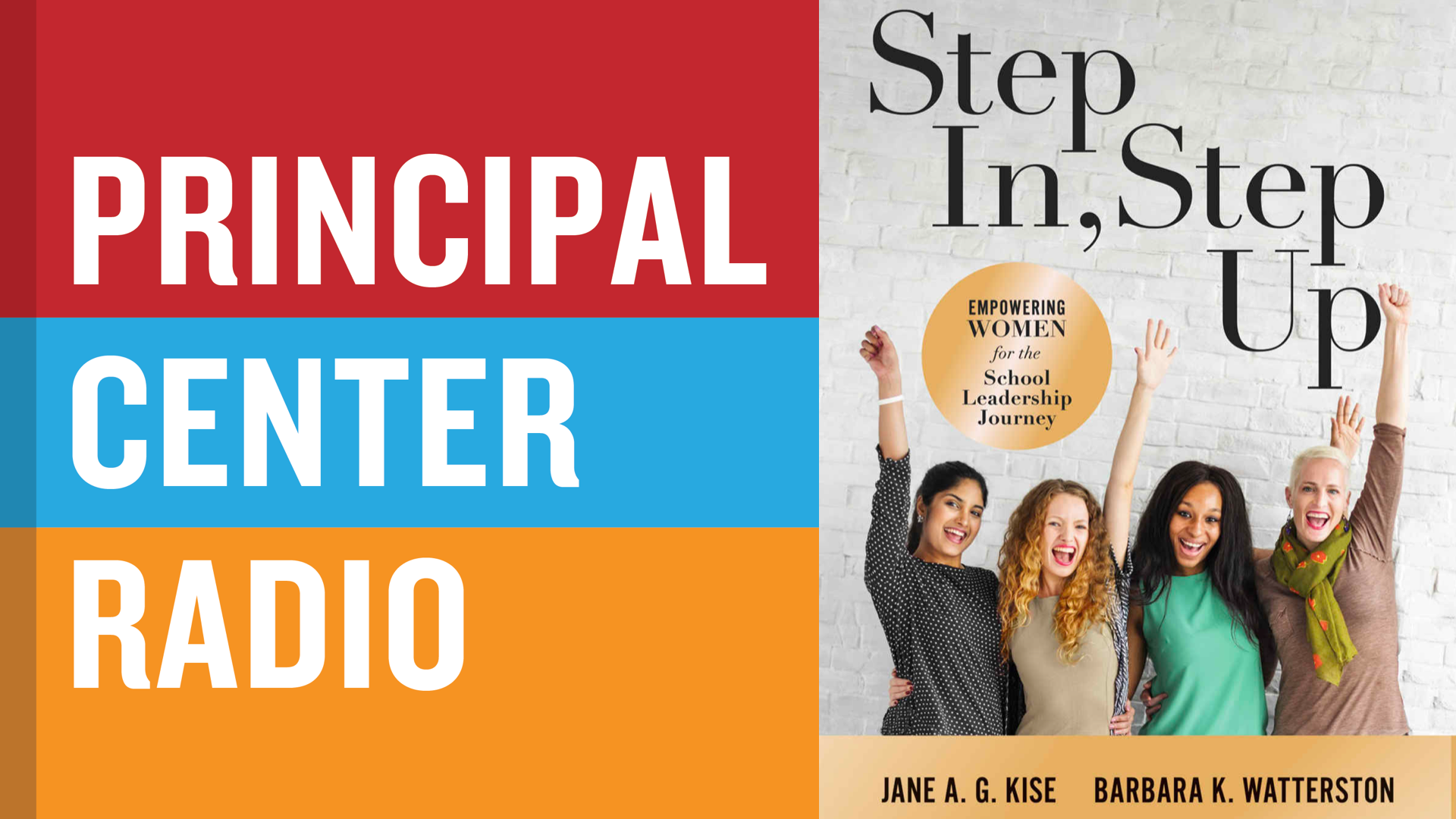
I'm your host, Justin Baeder, and I'm honored to welcome back to the show my good friend, Jane Kesey. Jane is an author, executive coach, and education consultant who works to create environments that people actually want to be in. She's the author of 26 books, including her new book, Step In, Step Up, Empowering Women for the School Leadership Journey, which we're here to talk about today.
[00:40] Announcer:
And now, our feature presentation.
[00:42] Jane Kise:
So Jane, welcome back to Principal Center Radio.
[00:45] Jane Kise:
Thank you. It's an honor to speak with you again.
[00:47] Jane Kise:
Well, I'm excited to see your new book, Step In, Step Up, because I think there has been a long tradition in our profession of women helping women step into leadership roles, which is tough, right? This is a profession where still we see in a lot of areas that men tend to be selected for leadership roles preferentially, and that's not a good thing. for the profession when we just have those kind of biases about who should be a leader and who can be a leader. So what did you see happening in our profession that prompted you to write Step In, Step Up?
[01:22] Jane Kise:
Justin, there's the obvious fact that we've still got a profession where 75% of our teachers, which are our most valuable people because they're on the front lines with children, 75% of our teachers are females, and yet we still have a preponderance of leaders who are male. And I am not talking about replacing men with women. I'm talking about changing what we look for in leadership so that we have the best of both. And the way I got into this was actually accidental. I mean, I've been working with school leaders for 20, 25 years now, but I was an emergency keynoter at a conference in Australia. One of the Australian keynoters came down with dengue fever.
[02:05]
So they thought, well, we better bring in an American to, you know, somebody foreign to make it look good. And I met my co-author, Barb Waterston, basically on the stage. And we did a lot of processing about the things we were hearing from the women who gathered for this event. And it was different from what we heard from men. And we realized what a need there still is to empower women. to take what's a very different journey into leadership than what men experience.
[02:30] Jane Kise:
Well, Jane, let's talk a little bit about why it is a different journey, because I think there is a kind of an archetypical career path that people tend to have in mind of moving from, say, a classroom teacher into a quasi-leadership role, into a formal leadership role, and then perhaps moving up the ranks from there. What is unique about that journey or about that process for women based on your experience talking with other educational leaders who have made that journey themselves?
[02:59] Jane Kise:
One of the first things when you talk about it as an intentional journey from classroom and up the ladder is that women usually fall into it. Barb did some pretty extensive research and whereas men often are planning for that move into leadership by the time they're in their late 20s or early 30s. Women generally end up in leadership because someone coerces or asks them to do something, or all of a sudden they're in charge of something, and it's not intentional. So one of the pieces is just thinking about, do I belong moving in leadership? And a couple of barriers that women seem more...
[03:36]
prone to then men are number one seeing the classroom as the place where you can have the most impact on children you might hear it as i'm here for the children or i'm in it for the kids and that's true i mean our teachers are our most valuable assets and no child makes progress without great teachers well some do because they're born independent study people but you know what i mean So that thought that being a leader actually lets you influence what happens for more children can be a tough leap for some women. And Barb did find that the women who've made that leap go, oh my gosh, I can do so much more. So women have more to do with finding more need to find the why they'd want to be in leadership. Why would they leave the classroom where they are empowered to help the children in front of them and move into a post where they can have power to accomplish more?
[04:26]
And that brings up the second barrier that we heard over and over, which is women's adverse relationship with power. We tend to think only of the abuse of power when we think of power. So at the Brisbane conference, someone asked one of the keynoters, you don't like having power, do you? And the keynoter said, power is how you get things done. I love having power. So the idea of having power, too, is very different than power over power.
[04:52]
And it's also different from how we might talk about power with, which is also important, you know, collaborative power to get things done. But, you know, when a leader or a woman embraces that I could actually make this difference if I take my strengths and put them toward this educational change is something that women often need to have support to embrace. So, you know, we have a whole list in the book of barriers that seem fairly unique to women. And they're all research-based. This isn't us making them up. Women are less inclined to think they have the skills for leadership, whereas men, there's some research that if men have 20% of the qualifications, they'll take the job.
[05:31]
And women need to have like 90% before they'll even apply. So, you know, there's that piece then that the women's journey is different because we've internalized these different barriers. barriers that keep us from just jumping forward. And then, of course, there's the external barriers. We still societally have an image of leadership that fits with how males traditionally lead. And we had a lot of fun looking at research.
[06:00]
There's a fantastic study that is captured in a book called The Athena Doctrine. They asked 32,000 people around the world what they value in leaders. And then they asked a different group what characteristics and leaders they consider, they associate with men and which they associate with women. And of all those things they value in men, eight out of 10 are associated with women and the other two are gender neutral in this research. And when they asked people, something like 70% of people worldwide said the world would be a better place if leaders led more like women. And so You know, when I look at what's happened in education and I look at, you know, and I'm not talking about stereotyping.
[06:46]
I'm talking about the archetypal way we look at the masculine and feminine. And if I start sounding like a feminist, I love the quote from Ellen Page, who's a Canadian actor. She said, I don't know why people are so reluctant to say they're feminists. Maybe some women just don't care. But how could it be any more obvious that we still live in a patriarchal world when feminism is a bad word? So I come back to what's happened in schools.
[07:09]
And you think about the logic and the objectivity and other things that we tend to associate with men around the world. And that's where you get things like data-driven instruction and accountability. And those are good things, but they have to be partnered with things like putting faces on the data, which of course comes from the work of female Lynn Sherritt, and support when you're holding people accountable. You can't hold someone accountable for something they haven't been trained to do or that you haven't been obvious in putting together. So this whole societal piece of we're taking a male model of leadership and right now what's being talked about is, well, if women would just tailor their leadership to fit into that male model, they'd succeed when in actuality, we need to shift how we view leadership if we're really going to help every child learn.
[08:02]
So that's one piece is just the institutional barrier. But also, there's this whole thing that's called the double bind. And, you know, if you've been following politics at all, you know, women are supposed to be likable before they even are considered for whatever other skills they have. You know, Julie Holland talks, she's a doctor, and she talks about this double bind as In the workplace, women are expected to get ahead by some mysterious combination of femininity and intelligence while simultaneously getting things done and disguising drive. And that means that women aren't actually being able to use their best strengths in the job. And that becomes a huge barrier to being yourself, being effective, and actually changing the discourse in your environment so we get the best of both worlds.
[08:51] Jane Kise:
Well, I think that idea of getting the best of both worlds seems like a very important one at the heart of a lot of your work. And I know that you and I have connected in the past over polarity management and this idea that there are kind of two sides to every issue. And each of those sides has an upside and a downside. And we need to consider both and manage both in order to get results. the most of what we want and the least of what we don't want. You know, if we have an extremely masculine leadership style, there are going to be strengths to that, but there are also going to be some big drawbacks.
[09:22]
And if we have, you know, what you would kind of describe as a stereotypically feminine leadership style, there are going to be strengths and drawbacks to that. And I love the way your book covers all of that ground and identifies, you know, those ways to manage that tension and get the best of both worlds.
[09:38] Jane Kise:
Yeah. And, you know, when we expect one way of leadership from someone based on their gender, that's stereotyping. And we're actually talking about the archetypal contributions that both styles make. So I don't know if you've seen the latest best research on brain differences by gender. And what's come up is there's more within gender variation as far as how we use our brains than between the genders. So this idea that Just because you're female, you lead one way.
[10:08]
And because you're male, you lead another. That's a false dichotomy. But when we look at the archetypes of what's valued or how leadership is expressed, then you get these different values coming to the fore. And we need both. And we need an environment where if women lead with the more male style, because their brain on the spectrum leads to that decision-making style, they aren't put down for it. And of course, men benefit too when they're free to be themselves.
[10:34]
Because we're all over the spectrum within a gender on how we approach this. And that's one of the chapters in the book is figuring out what is that natural style for you and when it's helping you and how to move the needle in your organization to be able to work from your strengths and bring both strengths to the fore.
[10:53] Jane Kise:
I love it. And I love the exercises and the frameworks that you have in the book for helping women really think through that and through the role that they want to play in education and back to something we mentioned earlier in our conversation around impact and recognizing that as an educator, I can have an impact directly on the students in my classroom, but I can also have an impact if I work outside of the classroom in some sort of leadership capacity. And I think everybody has their own unique mix of ways that they want to make a difference and what they value about the work. I wonder if we could talk for a moment, though, Jane, about moving into administration specifically, because I talk with a lot of people who are making that move or who have made that move or who are thinking about it and hesitating.
[11:44]
And I have to tell you, Jane, I see a huge gender difference overall in people's thinking about it, you know, coming into that transition where, you know, again, speaking very broadly, not about individuals in particular, but men tend to be very confident and just assume that this is what they're supposed to do and that they can do it and that people will give them a job. Whereas I hear a lot more self-doubt from women. And then I say, well, you know, tell me about your background. Tell me about your professional experience. And then it turns out that they're like the most qualified person in the world. They will get hired immediately if they apply.
[12:19]
And I'm like, how do you not see just how qualified you are versus... you know, the men who you're competing against for these jobs who have, as you said, kind of the minimum, you know, 20% of the qualifications. What's behind that? And how can we help women who do have such great potential as leaders to really see that potential in themselves and then go for it?
[12:44] Jane Kise:
Well, you know, one of the quotes I have in the book, and I don't remember who said it, but one of the things is to remember that a ton of the problems we're facing, both in education and in other sectors of our economy are were put in place by men who stepped forward without the skills and didn't know what they were doing. So we have to really think about what we're empowered to do. And I'm talking about the big financial crises and other things. But one of the things that we work on really hard in the book, I mean, we set up the book to be a 12-week journey. And we hope that, I mean, I love it when people stay up all night reading my books, but This book takes chewing on and reflection and practice and we hope you do it with other women because there's nothing better to bolster your confidence that you're ready to lead than hearing stories from other women.
[13:34]
You know, to hear their lived experiences and what convinced them or what they're worried about actually helps you build the confidence and they can point out what you're doing well that has you set up. So there's a whole chapter on figuring out which of these biases are getting in your way. Barb calls it deselecting your default like that. I'm not ready. And realizing that every leader is on a lifelong journey. You never arrive as a leader.
[14:03]
Every time I go into a new situation, I find out that what I learned at the last school I work with may have no bearing other than an open mind to what I'm going to run into in the next school. And that's true as a leader. You think you get something figured out in one setting and then you have a new group of people or a different budget scenario or different parents to work with or whatever it is. So you will be learning all along. And to understand that the only way you really become an expert leader is to step in and start leading, obviously with humility around where you need help from other people, an awareness, which we try and help build of, what your strengths are and how those strengths can get you in trouble. That's the key to building the confidence that you have got to plan for your own development.
[14:52] Jane Kise:
Absolutely. And I think one of the aspects of planning that you touch on kind of early in the book is looking at bandwidth and making some choices about what to take on and what to say no to in order to have the time to pursue leadership, to pursue growth as a leader. And I know there's a lot of discussion in the corporate world about women being given or taking on kind of the office housekeeping work. You know, who's going to take notes from this meeting? Who is going to coordinate? Who's going to follow up?
[15:24]
Who's going to do the bagels? You know, there's a ton that often women do step up and do. But it competes for their time and for their attention with all of the other stuff that women could be doing to grow as leaders. So what's your take on that kind of bandwidth issue?
[15:44] Jane Kise:
The beginning of my career, number one, never pick up the coffee cups off the table after a meeting unless men are doing it too. This is about... changing the norms of an organization. You know, I was just on a web call with the three other keynoters for an upcoming women in leadership event in San Antonio this summer.
[16:03]
And we were talking about self-care and these ways of changing the norms so these things don't happen. A couple of things on the chapter in the book on bandwidth. We have fallen into habits because technology just came along. You know, the iPhone was invented simply because Steve Jobs thought it would be great if people didn't have to carry a phone and an iPod and a camera. You know, if you go back to the launch, that's all it was meant to be, you know, and I'm not making this up. This is documented.
[16:32]
And of course it's become insidious and we have to step back and make it work for us. And that's just one little piece of bandwidth. You know, there's, um, It's still true that women spend about 90 minutes more a day on household tasks and child care and relationship care, whether it's elder parents or making the social connections for those who aren't part of extended families. And, you know, that's a norm we have to influence and protect ourselves with. There's a norm. One of Barb's colleagues called it I'm not your mom moments where, you know, both men and women in the workplace expect female leaders to be that listening ear to, as you said, take care of getting the bagels.
[17:21]
And we have to call people on that and shift the norms and talk about who's got the most bandwidth. If we were really changing what goes on in a school environment, gender wouldn't matter in the decision to become a principal because men would be just as concerned about how they were going to handle family or other personal obligations or what a move would mean to everything else in their life as women have to be. And, you know, we've got examples of things like principals who are job sharing. And why isn't this a norm? Because anyone who's ever shared a job knows that the organization's actually getting more than 50% from each person because productivity isn't linear. You know, productivity is exponential.
[18:06]
And at some point, It starts to drop based on the hours you're putting in, whereas, you know, limiting it, you've got this tail up. And so, you know, there's this attitude and you see it in every field where, well, we didn't have those opportunities. So why should anyone have those opportunities on so many levels? And we really need to change the conversations if everyone's going to have the bandwidth to bring their whole selves to leadership.
[18:28] Jane Kise:
Absolutely. And I think that's a great segue into some of the system level considerations, you know, for district senior leaders who want to see more women entering the principal pool in their district, for principals who want to see more teachers who are women consider educational leadership as part of their career path. What are some things that we can be doing at more of a systems level to encourage more women to lead?
[18:55] Jane Kise:
I think one thing is looking at the norms and what's accepted. I have been in situations where no one's aware that, for example, in a senior executive meeting, it's the women who are constantly being interrupted, that men just start talking over women when they have a position. At a systems level, there's research showing, for example, that a panel discussion that's all men, given how many, especially in education, how many experts are actually women, you almost have to have conscious bias. You can't be thinking at all to put together a panel that's all men or a team that's all men. And we're not talking about tokenism or anything. It's about recognizing that the norm won't change unless the picture at the top changes.
[19:45]
And we're inviting people to be part of it. And I want to say just one note that we only address gender in this book. I open with a story of an African-American colleague of mine. She is an attorney. She is a senior, senior person at a major regional university. And she went to a professional event.
[20:05]
And when she came up to the registration table, she was told, oh, the vendors and the other support people for this come to a different door. And she said, I don't even get to the gender barrier because the color of my skin still keeps me from being seen as a leader when people don't know me. And, you know, our heart goes out to those people. And we try and just mention this in the book because we can't address it in the book along with gender, but It all has to be part of what people are looking at at the systems level, and I just want to acknowledge that. And I think if we look at it through the eyes of the children, are we setting up an environment where the girls and boys in the classroom go against the stereotypes, where a little boy can say, wow, I could be a teacher, and think that's just as valuable as saying, wow, I could be a principal, and a little girl, or whatever their gender is, looks at the principal role and goes, I could do that, and I could make a difference.
[21:02]
You know, we have to be moving toward that. And there's quite a bit of research, and we cite some videos you can go and watch where children are asked to draw an astronaut, and 95% of the kids will draw a male. And there, you know, you can search Google for school principal, and 75% of the images that come up will be men. And a lot of the women's images aren't very favorable. And so you're consciously doing things. You know, I think back to I'm an early beneficiary of Title IX and the women's sports in schools.
[21:35]
But my school didn't stop with just forming women's team. There were conscious decisions at the top like, you know what, the boys basketball team is going to attend the girls basketball games in these first years for sure so that it becomes the norm that you go to girls sports. And let's look at what the cheerleaders wear. Are we turning them into athletes or are we giving a different message with what they're wearing? And these were conscious decisions from the administration. And I wonder whether school administrators are thinking about what they have to consciously do in those ways to make women be seen as leaders.
[22:12] Jane Kise:
Well, and I think people hesitate to speak up about doing things consciously because there's the fear that people will complain if something is specifically for women. And there's, you know, there probably is someone who will complain that, that men are left out of some, you know, just about anything you do. But I think if you look at just the way the world is, you know, men do tend to go for it when they don't have the same level of qualifications and They do tend to put themselves out there and to promote people like them. I mean, the way the world works is already geared toward promoting less qualified men. And we've got to pay attention to that and be willing to look at the strategies that you outline in the book to get closer to that parity. As you know, as you said, if we have 75% of teachers being women and overwhelmingly administrators are, you know, in many cases women,
[23:05]
largely men, something is not right there as far as the basis on which we're selecting people. And it almost reminds me, Jane, of, you know, the old height correlation that, you know, the taller you are, the more likely you are to be CEO and CEOs tend to, you know, like what a silly selection criterion. And I know in education in particular, sometimes basketball coaches become principals. There's nothing wrong with that. But, you know, it's certainly not the right criterion for selecting leaders, right? If height is not it, certainly our gender biases should not result in our selection of leaders as well.
[23:39] Jane Kise:
When Barb and I are running our days, we love having men in the room. We just put them at a separate table because the conversations then become safer. Men can talk About the same questions and go, you know, what, what do we need to do? And the women can say, what do we need to do? And then we can facilitate a conversation about what the organization needs to do. So again, we're not trying to exclude men's wisdom.
[24:02]
We're trying to figure out how to change the needle so that the children that we're serving benefit from a more balanced education system.
[24:10] Jane Kise:
So the book is Step In, Step Up, Empowering Women for the School Leadership Journey, a 12-week educational leadership development guide for women. Jane, if people want to learn more about your work and follow you online, where's the best place for them to connect with you and find you?
[24:27] Jane Kise:
Well, they can look at my website, which is janekeesey.com. And I'm on Twitter as Jane Keesey as well. So those are probably the two best spots.
[24:35] Jane Kise:
Well, Jane, thanks so much for joining me again on Principal Center Radio. It's been a pleasure.
[24:39] Jane Kise:
Thank you. It's great talking with you again, Justin.
[24:41] Announcer:
Thanks for listening to Principal Center Radio. For more great episodes, subscribe on our website at principalcenter.com slash radio.